(Original Video in Japanese was published on the FINOLAB CHANNEL on Sep. 16, 2025 by Makoto Shibata)
In this article, we’ll break down the Financial Administration Policy for the 2025 business year, announced by Japan’s Financial Services Agency (FSA), with a special focus on key fintech-related measures.
A New Direction: Leveraging Digital Tech to Address Structural Issues
The FSA’s policy emphasizes encouraging financial institutions to “take on the challenge of leveraging innovative technology,” particularly with the rapid rise of generative AI. At the same time, the FSA acknowledges structural issues like a shrinking population and aging society, aiming to balance user protection with financial system stability.
The policy highlights three key priorities: “Contributing to the sustainable growth of financial institutions,” “Ensuring the stability and integrity of the financial system,” and “Building an organization that constantly evolves to serve the public.” A recurring theme is the continuous focus on “adapting to the transformation of financial services through digital technology.”
Key Fintech Action Plans
The Administration Policy outlines several key action plans related to fintech:
1. Crypto Assets and Stablecoins
Recognizing the growing activity in this space globally, the FSA views crypto assets and stablecoins as key drivers of innovation in financial services.
User Protection: The policy calls for necessary institutional reforms to protect investors while promoting innovation.
Tax Reform: The FSA is moving toward a serious discussion on taxing crypto assets with “separate taxation,” similar to other financial products.
Enhanced Supervision: The FSA plans to strengthen its oversight of unregistered firms and establish a regulatory framework for Japanese yen-pegged stablecoins.
2. Support for AI and Fintech
AI Discussion: The FSA will launch a public-private AI forum based on its “AI Discussion Paper” to address practical challenges in the field.
Continued Support: Existing initiatives like “Japan Fintech Week,” the Fintech Support Desk, and the Fintech Sandbox will continue to be promoted.
3. Startup Support and Corporate Value Enhancement
In its push to make Japan a leading nation for asset management, the FSA has included measures to strengthen capital supply for startups.
Venture Capital: The policy aims to make venture capital a more attractive investment and will follow up on a 2024 report that outlined recommended actions for VCs.
Collaboration with the TSE: The FSA will work with the Tokyo Stock Exchange (TSE) to enhance support for companies before and after they list on the Growth Market.
Creating a Better Investment Environment: The FSA is exploring new frameworks, such as allowing unlisted stocks to be included in investment trusts, to expand venture investment opportunities.
4. Strengthening Risk Management
Measures to combat money laundering (AML) and cyberattacks are a high priority.
AML/CFT: The FSA will work to improve its anti-money laundering and counter-terrorist financing measures in preparation for the fifth round of mutual evaluations by the FATF.
Cybersecurity: The policy emphasizes the need to recognize cyber risk not just for financial institutions, but also for their outsourced partners.
Financial Crime: The FSA will work to strengthen its comprehensive measures against financial crimes, such as scams and fraudulent access to securities accounts.
Conclusion
The 2025 Administration Policy clearly shows the FSA’s commitment to embracing new technologies like generative AI and stablecoins while also strengthening the foundations of Japan’s financial infrastructure through startup support and robust risk management. Fintech companies should closely monitor these regulatory trends, as they will have a significant impact on future business development.
(Original Video in Japanese was published on the FINOLAB CHANNEL on Aug. 28, 2025 by Makoto Shibata)
The FINOLAB CHANNEL’s FintechTopics #119 video discusses the latest global stablecoin developments, particularly regulatory progress in the United States, Hong Kong, and Japan, defining stablecoins and explaining their impact on financial markets.
Stablecoin Definition and Background
Stablecoins are crypto assets that, unlike other volatile cryptocurrencies, typically maintain a 1:1 value peg to a fiat currency (such as the US dollar) and are backed by liquid assets like fiat currency, short-term government bonds, or central bank deposits. Historically, there have been cases like Terra, where a stablecoin collapsed due to a significant drop in the price of its underlying crypto asset. Therefore, new regulations explicitly define that stablecoins must be backed by stable assets like fiat currencies or government bonds, not by other unstable crypto assets.
US Stablecoin Regulationl (Genius Act)
The US legislation regarding stablecoins, known as the “Genius Act,” was passed by the Senate on June 17th and by the House of Representatives on July 17th, subsequently signed by the President, officially becoming law.
• Definition and Classification: The act clearly defines stablecoins as digital assets whose value is backed by stable liquid assets such as fiat currencies (e.g., US dollar), US short-term government bonds, or central bank deposits, and which can be redeemed at par value. It explicitly states that stablecoins are not securities, deposits, or bank liabilities.
• Issuer Qualification: Only authorized issuers are permitted to issue stablecoins. These include financial institutions covered by deposit insurance and licensed by the Office of the Comptroller of the Currency (OCC) (such as banks and credit unions), federally licensed non-bank issuers, and state-licensed issuers certified by the Treasury Secretary as meeting federal standards. Foreign issuers may also be approved if they are supervised under a regulatory framework equivalent to that of the US and agree in writing to comply with US regulations.
• Prudential Standards:
◦ Issuers must hold full reserves, meaning they must maintain reserves consisting of deposits or US short-term government bonds equal to the value of all issued stablecoins.
◦ Clear redemption methods must be published, and the monthly composition of reserves must be disclosed.
◦ Re-collateralization (issuing new stablecoins backed by other stablecoins) is prohibited.
◦ False reporting on reserve obligations is subject to criminal penalties.
◦ Issuers must adhere to regulatory standards regarding capital, liquidity, and operational risk, and establish systems for anti-money laundering (AML) checks and sanctions screening.
◦ In the event of bankruptcy, stablecoin holders are granted the highest priority claim on reserve assets.
• Regulation and Supervision:
◦ Scaled regulation is implemented: Issuers of stablecoins exceeding $10 billion in circulation are subject to mandatory federal supervision. Issuers below $10 billion may choose state-level supervision, but state regulations must be certified by the Treasury Secretary.
◦ Regulatory agencies are determined by the issuer type: national banks are regulated by the OCC, state member banks by the Federal Reserve (FRB), state non-member banks by the Federal Deposit Insurance Corporation (FDIC), credit unions by NCIA, and all non-bank issuers are regulated by the OCC.
• Impact on the Market:
◦ The act is expected to increase demand for US Treasury bonds, as regulations require stablecoin reserves to include short-term government bonds. Currently, the two largest stablecoin issuers, Tether and Circle, already hold substantial amounts of US short-term government bonds (Tether around $125 billion, Circle around $55.2 billion), indicating their actions significantly influence the supply and demand in the US Treasury market.
◦ Major banks such as Goldman Sachs, JPMorgan, Citi, and Bank of America have expressed their intention to enter the stablecoin market following the enactment of this law.
◦ The proliferation of stablecoins is expected to enhance the US dollar’s status and presence in international financial markets and settlements.
◦ The act effectively “ratifies” existing stablecoins (like USDT, USDC), and their circulation is expected to continue growing. Some believe that stablecoins could become a de facto alternative to a US Central Bank Digital Currency (CBDC), thereby maintaining the dollar’s dominance in the decentralized finance (DeFi) sector.
Hong Kong Stablecoin Bill
Hong Kong’s stablecoin bill was passed in May and came into effect on August 1st.
• Regulatory Framework: The Hong Kong Monetary Authority (HKMA) has established a dedicated website to explain the implementation details. Hong Kong aims to distinguish its relatively flexible crypto asset policy from mainland China’s digital yuan (CBDC) operations to maintain its status as an international financial hub.
• Applicable Scope and Definition: The act targets stablecoins pegged to fiat currency, termed “Fiat-referenced Stablecoins” (FRS). A license is required for stablecoins issued within Hong Kong or those issued abroad but offered to Hong Kong residents. Providing services or engaging in marketing activities to Hong Kong without a license is prohibited.
• Licensing Requirements:
◦ Reserves and Redemption: Full asset backing, clear redemption procedures, and segregated management of customer assets are required (similar to the US).
◦ Capital Requirements: A minimum paid-up capital equivalent to HKD 25 million must be maintained.
◦ Risk Management and Governance: A three-lines-of-defense framework involving directors and executives, internal controls, oversight systems, credit/liquidity risk management, and stress testing must be established, meeting the risk management standards of financial institutions.
◦ AML/CTF: Robust anti-money laundering and counter-terrorist financing measures must be implemented in accordance with HKMA guidelines.
◦ Service Recipient Restrictions: After obtaining a license, services are primarily directed at institutional investors, with only limited access for individual investors.
• Goals and Current Status: The Hong Kong government aims to promote Web3 and cross-border payments based on the principle of “same activity, same risk, same regulation,” while balancing financial stability. This is considered leading legislation in Asia, aligning with the EU’s MiCA and US laws. Currently, no institutions have yet received licenses, and the HKMA anticipates issuing the first licenses early next year, showing caution towards market exuberance.
Japan’s Stablecoin Developments
Japan revised its Payment Services Act in 2020, implementing it the following year to legally define stablecoins.
• Recent Progress: On August 18, 2025, JPYC announced it had obtained registration as a money transfer business, with plans to issue a Japanese yen stablecoin within the year. This will be the first JPY stablecoin to enter the market.
• Expected Benefits:
◦ Positive Impact on the Japanese Government Bond (JGB) Market: As the issuance of JPY stablecoins increases, their reserves may require the purchase of JGBs, potentially increasing bond liquidity and affecting interest rates.
◦ Strengthened Domestic Remittance and Settlement Infrastructure: The introduction of JPY stablecoins will enable anytime, anywhere settlements and remittances via blockchain, significantly reducing the time and cost associated with traditional bank transfers.
◦ Promotion of Digital Finance Innovation: JPYC plans to issue on chains like Ethereum, Avalanche, and Polygon, supporting Web3 and programmable settlements driven by smart contracts. This will enable new features such as conditional automated settlements and automated recurring payments that were previously difficult to automate.
◦ Enhanced International Presence of the Japanese Yen: The emergence of JPY stablecoins is expected to increase the use of the Japanese yen in international transactions, boosting its international presence.
Conclusion
Globally, stablecoin regulatory frameworks are rapidly evolving, with countries striving to balance financial innovation and stability. The legislative and issuance practices in the US, Hong Kong, and Japan indicate that stablecoins will play an increasingly important role in the future international financial system, potentially transforming traditional financial landscapes and payment methods.
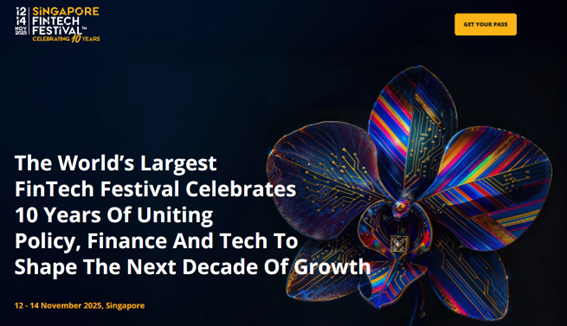
The Singapore FinTech Festival (SFF) is a global nexus where policy, finance, and technology communities converge. It is the world’s stage for defining the future of financial innovation, inclusion and resilience.
As SFF marks its 10th edition this year, leaders will gather in Singapore from 12 to 14 November 2025 to celebrate a decade of collaborative innovation, where ideas born in financial institutions, regulatory bodies and startups have matured into resilient solutions. The event will also confront the biggest unresolved challenges in global finance to chart the next decade of smarter, more inclusive and responsible growth.
SFF is organised by the Monetary Authority of Singapore, GFTN, and Constellar and in collaboration with the Association of Banks in Singapore.
FINOLAB is one of the community partners of SFF, and our community members can get a discount (20%) code for registration.

 CONTACT