
G-SFIA2026 | Global Space Financial Innovation Alliance Conference


JOIN
PEATIX

G-SFIA Global Space Financial Innovation Alliance / Capital has no gravity / 11.4 Wed 2026 @Global Business Hub Tokyo

TICKET

Get your ticket

Registration is handled through Peatix.
Early Bird tickets are available.

Register on Peatix→

Registration closes as soon as the venue is full.

ABOUT

The space business enters the age of
industry, academia, government — and finance.

G-SFIA is a conference that creates the crossing point between the commercialization of the space industry and finance and investment.

A keynote, panel discussions on satellite use and public-private collaboration, a startup pitch, and networking at the Rooftop Night — all in a single day.

PROGRAM

How the day runs

Part 1 | Main Conference
13:00-17:30 / Global Business Hub Tokyo

13:00 – 13:10

Welcome / Opening

Makoto Shibata (FINOLAB) / Yoshimasa Hayashi (Minister for Internal Affairs and Communications)


Makoto Shibata of FINOLAB opens the day, followed by an opening speech from Yoshimasa Hayashi, Minister for Internal Affairs and Communications.

13:15 – 13:55

Panel Discussion 1

Culture × entertainment

14:00 – 14:40

Panel Discussion 2

Deployment × capital

14:50 – 15:15

Keynote

Hermann Ludwig Moeller (Director, European Space Policy Institute)


Director of the European Space Policy Institute (ESPI), Europe’s think tank on space. From a position of promoting European space policy globally and providing independent analysis and recommendations to decision makers and institutions, he speaks on where space and capital stand today.

15:20 – 15:40

Startup Pitch

Startups building businesses across space and finance take the stage


Space and fintech startups each share what they are building right now.

15:45 – 16:10

Panel Discussion 3

Space insurance × risk hedging

16:15 – 16:40

Panel Discussion 4

Positioning × authentication

16:45 – 17:25

Panel Discussion 5

Satellite data × credit & investment

17:25 – 17:30

Closing

Part 2 | Rooftop Night
18:00-20:00 / SKYLAB, Otemachi Building rooftop

18:00 – 20:00

Rooftop Night

Networking between speakers and attendees


We take over SKYLAB, the rooftop of the Otemachi Building, for networking between speakers and attendees. Under the night sky in the middle of Tokyo, the interest sparked during the day turns straight into a next step.

18:00-20:00 / SKYLAB, Otemachi Building rooftop (about 5 min walk from the main venue)

SPEAKERS

Speakers
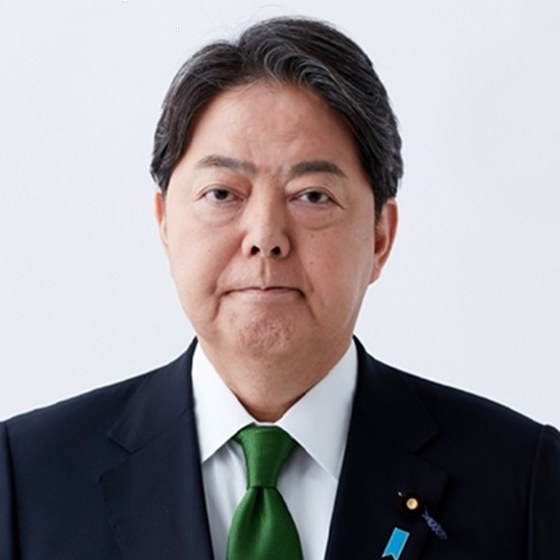

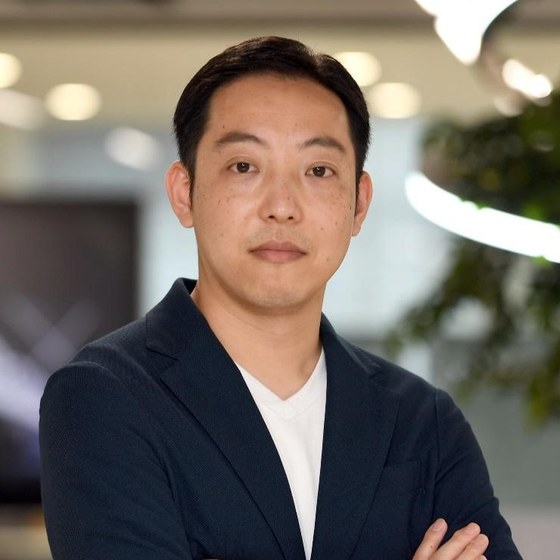
Yoshimasa Hayashi

Yoshimasa Hayashi

Former Minister for Internal Affairs and Communications
Member of the House of Representatives

PROFILE

He entered politics after working at Mitsui & Co., Sanden Kotsu and Yamaguchi Gogo Gas, and has served five terms in the House of Councillors and three in the House of Representatives. He has previously held office as Minister for Internal Affairs and Communications, Chief Cabinet Secretary, Minister for Foreign Affairs, Minister of Education, Culture, Sports, Science and Technology, Minister of Agriculture, Forestry and Fisheries, Minister of State for Economic and Fiscal Policy, and Minister of Defense. He is a graduate of the Faculty of Law, the University of Tokyo, and holds an MPA from the Harvard Kennedy School.

Hermann Ludwig Moeller

Hermann Ludwig Moeller

European Space Policy Institute (ESPI)
Director

PROFILE
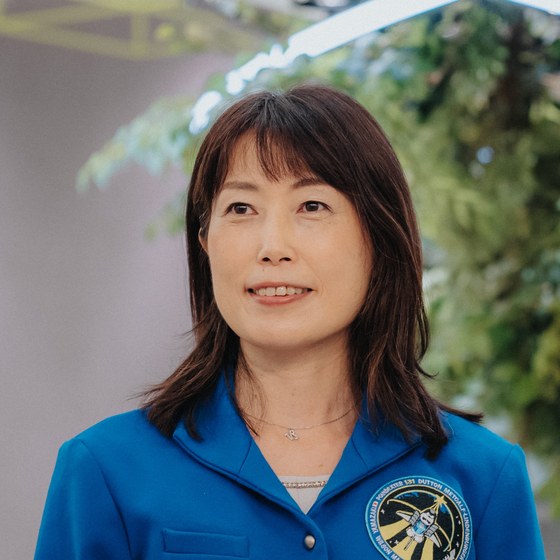
Since 2022, Hermann Ludwig Moeller is the Director of the European Space Policy Institute (ESPI) in Vienna, the European Think Tank on Space, elected for a second term 2025-2028. ESPI is promoting European Space Policy globally, is providing independent analysis, proposals and recommendations to European decision makers and institutions and is raising public awareness on strategic space issues. Prior to joining ESPI, he held leading positions at ESA in the creation of the EU Copernicus Earth Observation programme and in the preparation of the EU Secure Connectivity initiative as Head of Copernicus Space Segment Office and Head of Telecommunications Strategy, Programme and Transformation Office. Mr. Moeller has more than 20 years of experience in operating with high level leadership in a complex multi-stakeholder environment with national space agencies, ESA member states, at EU level and with EUMETSAT, as well as in public-private partnerships with industry. He was awarded the ESA Douglas Marsh Fellow at NASA and contributed to the creation of the European Internet backbone. He gained first professional experience at the European Patent Office HQ and Siemens HQ. Mr. Moeller holds a master degree in telecommunications, following studies at Technical University Darmstadt and Ecole Nationale Supérieure de Télécommunications (ENST) – Télécom Paris. He is of German nationality with working experience in Germany, Italy, the USA, The Netherlands, France and Austria, is married and father of four children.

Naoko Yamazaki

Naoko Yamazaki

Astronaut
 

PROFILE
Yamazaki was selected as an astronaut candidate by the Japan Aerospace Exploration Agency (JAXA) in 1999 and flew aboard Space Shuttle Discovery on the STS-131 mission to the International Space Station in 2010. Following her retirement from JAXA in 2011, she served on Japan’s National Space Policy Committee (2012-2022). She co-founded Space Port Japan Association in 2018 and serves as its Representative Director. She is also a Council Member of The Earthshot Prize to protect our home planet, President of Young Astronaut Club Japan, and, since 2025, General Manager of Vast Japan. She holds a Ph.D. in Engineering from the University of Tokyo.

Hidetaka Aoki

Hidetaka Aoki

Space Port Japan, Co-Founder & CEO
Space Evangelist®

PROFILE
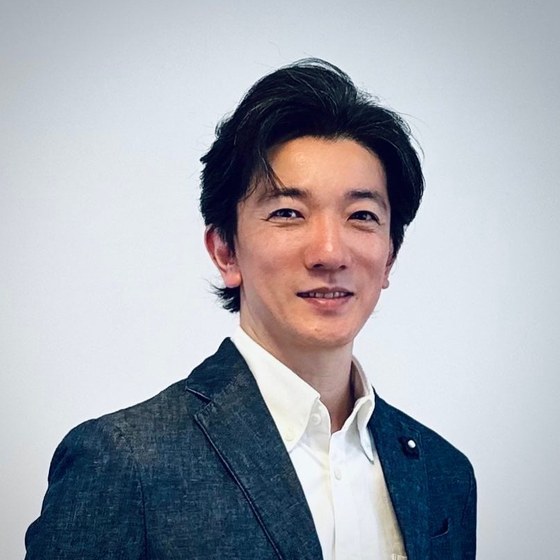
As a “Space Evangelist”, Hide Aoki promotes Japan’s private-sector-led space industry through his expertise in business and technology. After earning a master’s degree in aerospace engineering and a pilot’s licence in the U.S., he joined Mitsubishi Electric, where he worked on Japan’s first cargo spacecraft, Kounotori, and the SLIM lunar lander. He has supported space start-ups as an investor for over 10 years. He also co-founded SPACETIDE Foundation and serves as CEO of Space Port Japan. In addition, he contributes to JAXA and government committees through his broad experience in the space sector.

Mitsunobu Okubo

Mitsunobu Okubo

Digital Agency / Ministry of Finance
Deputy Chief Information Officer

PROFILE
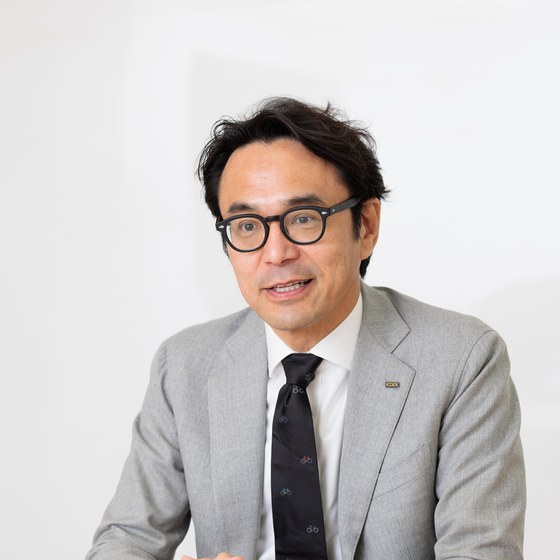
Japan’s representative to the ASEAN+3 expert dispatch programme for civil service cooperation, and an advisor to the Financial Data Utilization Association. A cross-sector player who also serves as a municipal CIO and a visiting MBA professor. After founding a company in the U.S. as a student, he worked as an architect for internet banking at Dentsu Soken. He has previously served as CTO of Mizuho FG / BlueLab, as a mentor for the Tokyo Metropolitan Government’s foreign company attraction programme, and as an advisor to the Financial Services Agency. Through pro bono work he mentors startups and builds ties with industry bodies abroad, helping shape the ecosystem for financial innovation.

Mihoko Shintani

Mihoko Shintani

TMI Associates
Partner

PROFILE
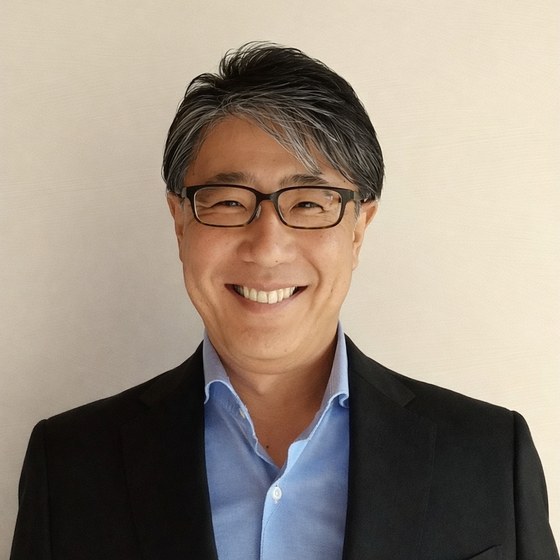
Ms. Shintani has been practicing law in Japan for over 20 years, building a distinguished career in aerospace, defense, and technology law. After pursuing graduate studies at Columbia Law School, she has spent over 13 years devoted to the space industry, advising both legacy aerospace corporations and emerging startups on complex business transactions, venture investments, and risk management. She has extensive experience managing major disputes and high-profile cases, including large-scale projects for Japan’s Ministry of Defense. Beyond her practice, she has actively contributed to national policy, serving on Japan’s Space Policy Committee, including the Security Subcommittee and the Transport Subcommittee, and participating in recent legislative reforms in the aerospace sector. She also serves as an outside director at Rapidus Inc., a national strategic semiconductor company. Her work extends to Deep Tech industries, including aerospace, defense, and frontier technologies, where she provides legal guidance on complex business transactions and strategic initiatives.

Hiro Hayashi

Hiro Hayashi

Mitsui Sumitomo Insurance Co., Ltd.
Senior Specialist, Aerospace

PROFILE
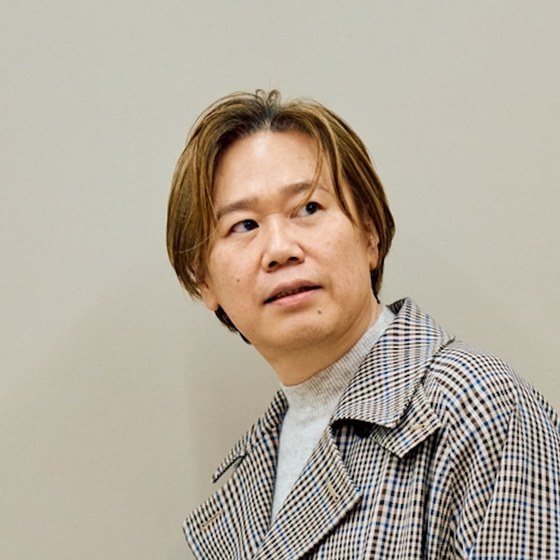
With over 35 years of experience in the insurance industry, including 12 years in space and aviation insurance. He is currently the only Senior Specialist in the Aerospace field at Mitsui Sumitomo Insurance, where he leads initiatives in risk management for space businesses and actively promotes space insurance as a method of risk hedging. Since joining the company he has been responsible for client relations with the Ministry of Land, Infrastructure, Transport and Tourism, major railway operators, and leading electronics and automobile manufacturers. He lectures on aviation law at Keio University’s Faculty of Law and at the Faculty of Law of Gakushuin University, and appears frequently in media interviews and publications. Having been stationed in London and Sydney, he brings a wealth of international experience and expertise in arrangements such as Global Insurance Programs. He is a Board Member of the Japan Space Forum.

Masayoshi Boku

Masayoshi Boku

Bascule Inc.
CEO / Creative Director

PROFILE
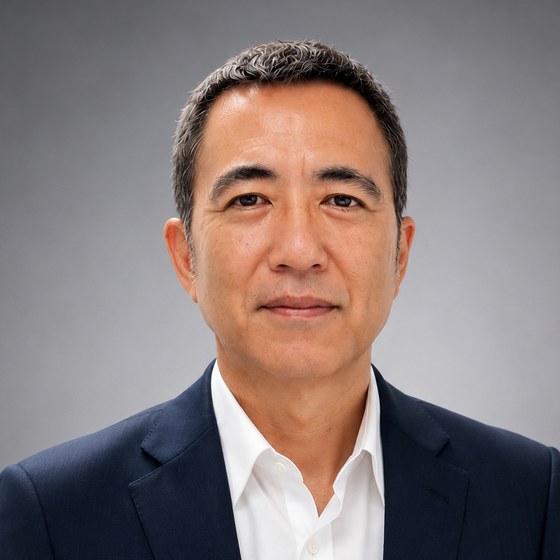
He founded Bascule in 2000. Using technology, he creates experiences that cut across advertising, broadcasting, sport, cities and space, and has won several hundred international creative awards. In 2020, in a co-creation with JAXA, he launched “KIBO Space Broadcasting Station”, connecting the International Space Station with the ground. At Expo 2025 Osaka, Kansai he worked on the experience design of two signature pavilions and delivered the Expo’s first interactive live event linking the ISS with the venue. In 2026 he launched “TerraCaster”, an Earth-observation video platform, in earnest together with Nippon Television. He works to bring the view of Earth from space into everyday life and to create space entertainment anyone can take part in.

Takahiro Shinohara

Takahiro Shinohara

Data Trust Ltd.
President & CEO

PROFILE

Since 1998 he has been engaged in mobile network planning, coverage design and quality optimization. From 2001 to 2015 he worked within the Kyocera Group, contributing to telecommunications technologies and businesses during a period of rapid growth in the mobile communications industry. In 2015, recognizing the significant potential of integrating mobile communications with Global Navigation Satellite System (GNSS) technologies, he founded Enabler Ltd. In 2018 he co-founded ALES Inc. with SoftBank Corp. and led the commercialization of high-precision positioning information services. Since 2021 he has been working on the design and development of an “Information Trust Infrastructure” that integrates communications, positioning, cryptographic and blockchain technologies. In 2025 he founded Data Trust Ltd. Today he is focused on establishing the authenticity of location, time and digital data, with the goal of building a “Verifiable Information Trust Infrastructure” for AI agents, finance and industry.

Taichi Furuhashi

Taichi Furuhashi

Professor, Aoyama Gakuin University
President & CEO, MAPconcierge Inc.

PROFILE
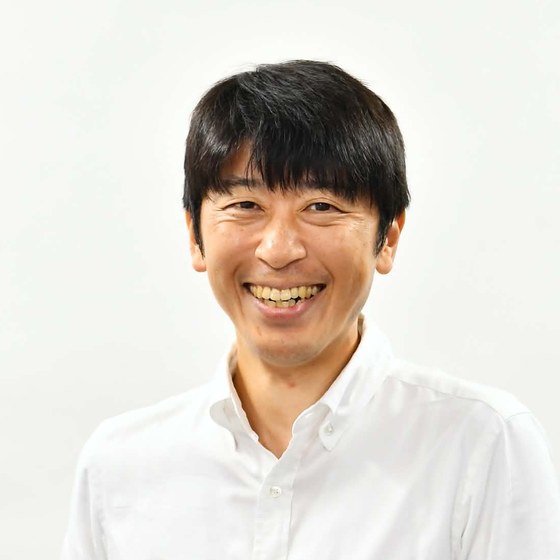
Chair of Crisis Mappers Japan, a collaborating researcher at the Center for Spatial Information Science at the University of Tokyo, and a member of OpenStreetMap Foundation Japan and the Japan chapter of the OSGeo Foundation. He holds a master’s degree in environmental studies from the Graduate School of Frontier Sciences, the University of Tokyo. His fields are cartography and spatial information science. Centred on the use of geospatial information, he provides technical consulting and teaching on Google geo services, open-source GIS and open data (OpenStreetMap, PLATEAU, the Tokyo Digital Twin and others). In recent years, under the banner of turning every citizen into a surveyor, he has thrown himself into OpenStreetMap, criss-crossing the field with panoramic imaging and drones to make maps.

Kakuta Inoue

Kakuta Inoue

Dentsu Soken Inc., Business Development Office
Chief Producer, BizDev Team

PROFILE
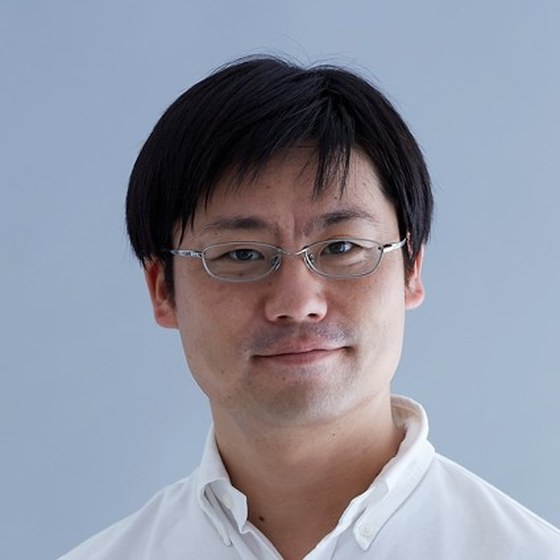
From 1999 he worked as a systems engineer at an IT company within a trading house group, handling financial systems development, new business development in the M2M field and support for overseas startups entering Japan. In 2016 he joined Information Services International-Dentsu (now Dentsu Soken), where he ran a community space for fintech startups and worked on the company’s own new business development. He joined FINOLAB, Inc. at its founding, focusing on business development support for corporates and on startup support, helping create and grow new businesses. In 2026 he returned to the Business Development Office at Dentsu Soken, where he now works on exploring new business opportunities and building new businesses.

Naruo Kanemoto

Naruo Kanemoto

Space Shift, Inc.
CEO & Founder

PROFILE
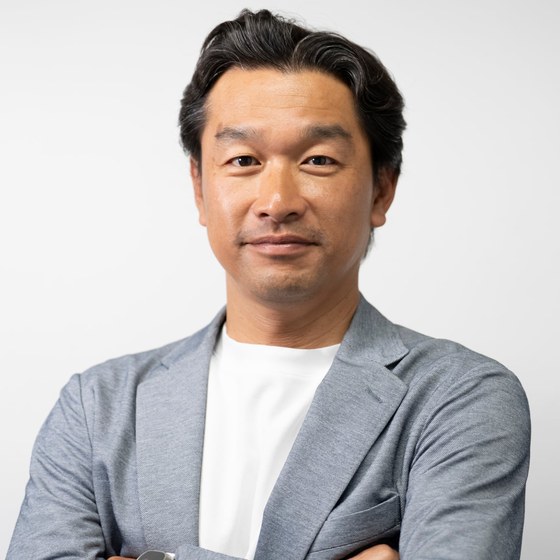
Naruo Kanemoto is a Japanese entrepreneur and the CEO / Founder of Space Shift, Inc., one of Japan’s first multinational space startups. With a background in machine learning, Kanemoto’s career journey spans from the music industry to the space sector, giving him a broad range of skills and experiences. In 2009 he established Space Shift, which focuses on developing software for satellite data analysis using AI and machine learning. Beyond his leadership at Space Shift, Kanemoto is also involved in consulting for non-space companies, helping them integrate space technologies into their businesses. He is a member of the Japanese Ministry of Internal Affairs and Communications’ Conference on Space x ICT and the Future Vision of Space Utilisation, contributing to the direction of space-related policies and innovations in Japan.

Naohiko Kohtake

Naohiko Kohtake

Keio University
Professor, Graduate School of System Design and Management

PROFILE
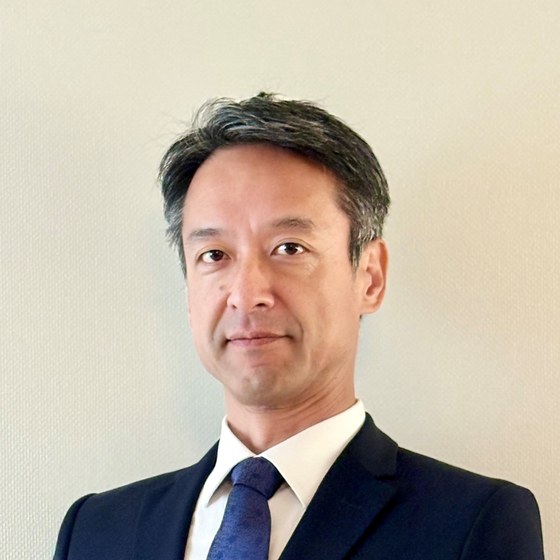
After completing his graduate studies at the Graduate School of Science and Technology, Keio University, he joined the National Space Development Agency of Japan, where he worked on the development and launch of the H-IIA rocket. Following a research post at the European Space Agency (ESA), he served as a principal engineer at JAXA, leading independent verification and validation of software for the International Space Station and satellites, and handling international cooperation with NASA and ESA on spacecraft software. He moved to Keio University in 2009. He has since served as a visiting professor at the Asian Institute of Technology, an advisor to the High Performance Strategy Division of the Japan Sport Council, and Principal of Keio Yokohama Elementary School. He is a director of the Japan Institute of Navigation, a steering committee member of Multi-GNSS Asia, and Representative Director of the Space Service Innovation Lab. He is also a visiting professor at the Center for Design Research, Stanford University, and a visiting professor at the Institutes of Innovation for Future Society, Nagoya University. PMI PMP. Ph.D. in Media and Governance.

Kazuo Takubo

Kazuo Takubo

Japan Aerospace Exploration Agency (JAXA)
Senior Advisor, Business Development and Industrial Relations Dept. / Space Strategy Fund Dept.

PROFILE
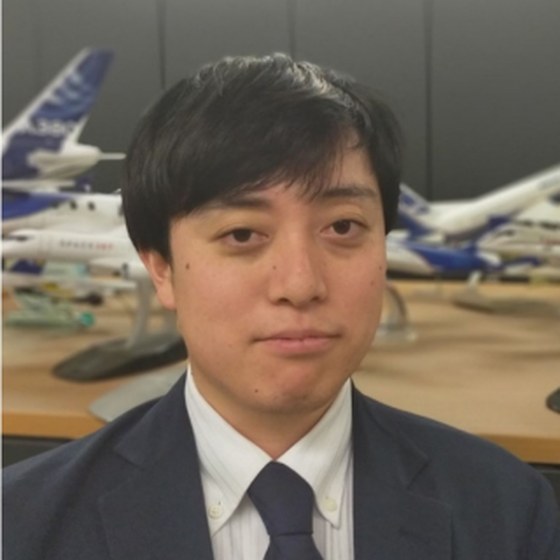
He spent some 30 years in banking, working in structured finance and overseas operations. A posting in Europe showed him how highly Japanese engineering and quality are regarded abroad, and he moved into the space sector wanting to build on that strength as a new industry for the world. At JAXA he now supports companies entering and commercializing in the space field, and works to expand the flow of capital into the space industry and to build momentum for industrial support from financial institutions.

Kentaro Iwanaga

Kentaro Iwanaga

Space Industry Division, Manufacturing Industries Bureau, METI
Deputy Director

PROFILE

Kentaro Iwanaga joined the Ministry of Economy, Trade and Industry (METI), Japan, in 2017. He has worked on policies related to trade control, economic security, information technology, and the aircraft industry, including the development of aircraft industry strategies, technology development programs, and supply chain resilience initiatives. Since July 2024, he has been responsible for formulating policies to promote the commercialization and growth of Japan’s space industry.

Tsubasa Nara

Tsubasa Nara

Mizuho Bank, Ltd.
Head, Innovation Companies Credit Office

PROFILE
He joined Mizuho Bank in 2000. After working in sales for mid-sized companies and large corporations, credit review for large corporations, loan planning and branch management, he took up his current position in 2023, heading the startup-focused credit department — the only department at a Japanese bank that also carries a client-facing relationship function. Centred on debt financing for startups, he supports their growth across a broad range of needs.

More speakers will be announced as they are confirmed.
Speakers and program are subject to change.

OUTLINE

Event Details

Name
G-SFIA 2026 (Global Space Financial Innovation Alliance)
Date & Time
Wednesday, 4 November 2026, 13:00-17:30
Rooftop Night 18:00-20:00
The full timetable will be announced in stages
Venue
Global Business Hub Tokyo (Otemachi, Tokyo)
The Rooftop Night is held at SKYLAB, Otemachi Building
Organizer
FINOLAB, Inc.
Admission
Please see the Peatix page
Early Bird tickets available
How to Register
Peatix registration page

ACCESS

Access

MAIN 13:00–17:30
Main Conference

Global Business Hub Tokyo

1-9-2 Otemachi, Chiyoda-ku, Tokyo 100-0004
Otemachi Financial City Grand Cube, 3F

Directly connected to Otemachi Station (Tokyo Metro)
About 8 min walk from JR Tokyo Station, Marunouchi North Exit

Open in Google Maps →

NIGHT 18:00–20:00
Rooftop Night

SKYLAB, Otemachi Building

1-6-1 Otemachi, Chiyoda-ku, Tokyo 100-0004
Rooftop, Otemachi Building

Directly connected to Otemachi Station (Tokyo Metro)
About 5 min walk from the main venue

Open in Google Maps →

SIDE EVENT

Side Events

SIDE EVENT 01

The future of space business, read from the SpaceX IPO

Wednesday, 21 October 2026, 18:30 – 20:30

Register on Peatix→

Overview & Speakers

Taking the SpaceX IPO as the starting point, this session brings together the side that runs space funds as an institutional investor, the space ventures actually raising the money, and the vehicles now opening to individuals opportunities that were once open only to institutions. From those who put capital in to those who receive it, we look at the full circulation of money through the space business.

  • Keiko Sydenham
    LUCA Japan, Representative Director & CEO
  • Kazuo Yonekura
    MJOLNIR SPACEWORKS, Representative Director & CEO
  • [Moderator] Misuzu Onuki
    SPARX Asset Management, Executive Vice President, Space Investment Team, Next Generation Growth Investment Department
SIDE EVENT 02

Space for Green Finance
Verifying Value Across Sectors

Thursday, 5 November 2026, 13:00-15:30

Coming soon

Overview & Speakers

Co-organized by ESPI (the European Space Policy Institute) and FINOLAB.

In this seminar, companies that turn satellite data into business each answer, for their own sector: what decision does the data unlock, and what financial instrument or investment case does it enable? Green finance and sectoral decision-making are treated as a single continuum, not as two separate themes.

  • Speakers
    Coming soon

JOIN US

Register (Peatix)

Join us for a day where space and finance meet.
Registration is handled through the Peatix page.

Go to the Peatix page→

Wednesday, 4 November 2026, 13:00-17:30 / Global Business Hub Tokyo

ORGANIZER & SUPPORTERS

Organizer & Supporters

ORGANIZER

COOPERATING ORGANIZATION


PLATINUM


GOLD

BRONZE


PARTNERS


ARCHIVES

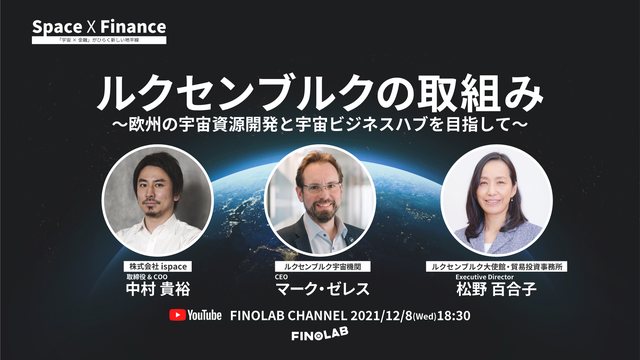
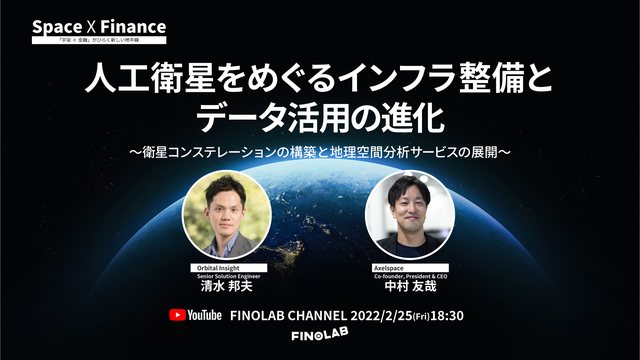
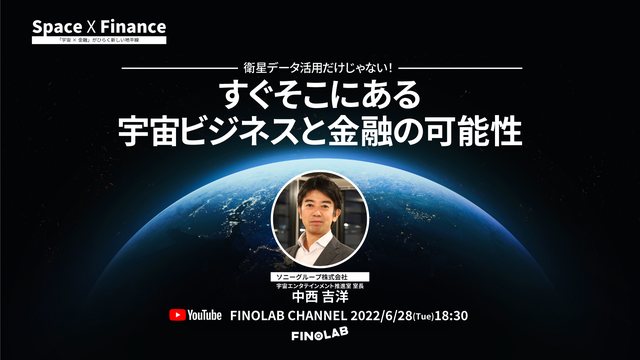
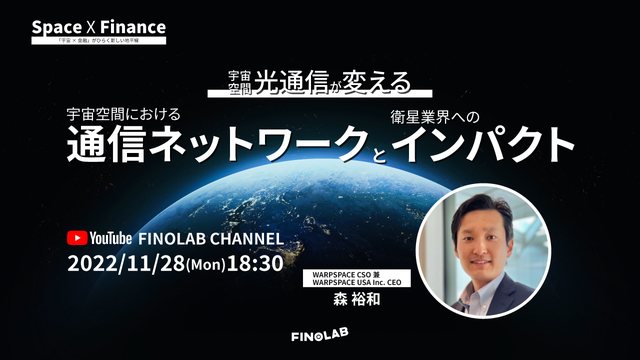
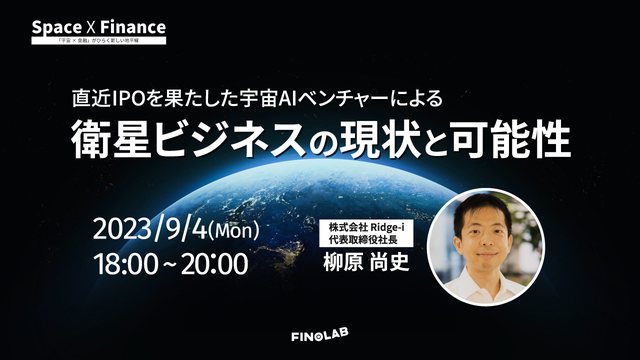
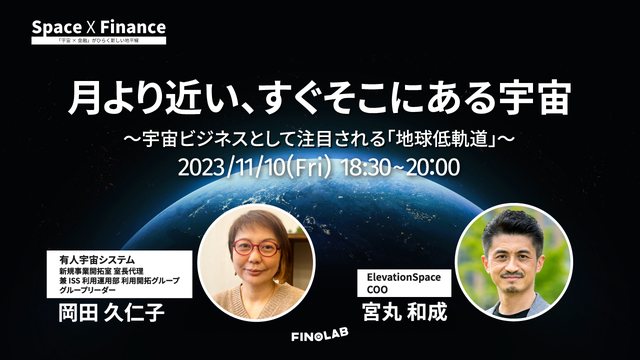
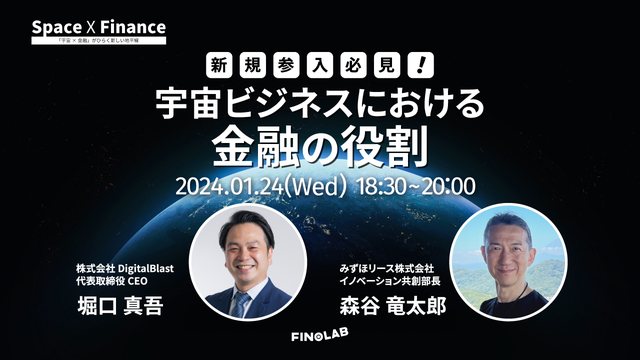
Past “Space × Finance” sessions

A seminar series FINOLAB has run since 2021.
G-SFIA builds on all of it. Click a thumbnail to watch the archived video.
[Summary] Expansion of Startup Fundraising – Deregulation and Emerging Trends | FinTech Topics #132

(Original Video in Japanese was published on the FINOLAB CHANNEL on Sep. 15, 2026 by Makoto Shibata) https://youtu.be/FgaaJaqEy1g

Japan has been introducing a series of regulatory reforms and new financial mechanisms to expand funding opportunities for startups. The starting point was the government’s Five-Year Startup Development Plan, adopted in November 2022. The strategy aims to fundamentally strengthen Japan’s startup ecosystem through three major pillars: developing entrepreneurial talent and networks, substantially increasing the supply of capital, and promoting open innovation between startups and established corporations. One of its headline objectives is to increase annual investment in startups to around ¥10 trillion within five years.

Since then, reforms have addressed different stages of startup growth and both sides of the investment relationship. Four particularly important areas are stock options, angel investment taxation, equity crowdfunding, and secondary markets for unlisted shares.

Stock options are important for startups because they allow companies with limited cash resources to attract and retain talented employees by sharing the potential upside of future growth. Japan has gradually made its stock-option regime more flexible. For qualifying stock options, taxation can be deferred from the time of exercise until the shares are sold. The exercise period was extended from ten to fifteen years in the FY2023 tax reform. The FY2024 reform further expanded the framework by introducing a system under which issuing companies can manage shares themselves and increasing the maximum annual exercise amount from ¥12 million to as much as ¥36 million. Legal reforms have also introduced a stock-option pool mechanism, giving startups greater flexibility in designing employee incentives.

The angel tax incentive has also been expanded to encourage investment at the pre-seed and seed stages. The system provides tax benefits to individual investors funding startups. Reforms introduced a Japanese version of the U.S. Qualified Small Business Stock concept, allowing preferential treatment when capital gains are reinvested in early-stage startups or used to establish a new business. Subsequent changes broadened eligible investments and extended the period during which capital gains can be reinvested. In FY2024, investments using the angel tax incentive reached approximately ¥18.5 billion, demonstrating the growing role of individual investors in startup financing.

A third area is equity crowdfunding. Japan introduced the framework in 2015, but initially imposed relatively strict limits: an individual could invest only ¥500,000 per company, while fundraising was effectively capped at ¥100 million. The rules have subsequently been relaxed. In 2022, the calculation method was changed so that companies could raise up to ¥100 million through crowdfunding alone. In 2025, the fundraising ceiling was raised to ¥500 million, while the individual investment limit was relaxed to 5% of the investor’s net assets, subject to a maximum of ¥2 million. At the same time, larger offerings remain subject to disclosure and auditing requirements, balancing easier access to capital with investor protection.

Perhaps the most significant structural development is the effort to establish a functioning secondary market for unlisted shares. Historically, Japan’s startup ecosystem has suffered from limited liquidity in private shares. Venture capital funds typically have a life of around ten years and eventually need to exit investments. Without an active secondary market, this has often meant relying on an IPO or M&A transaction. The lack of alternative liquidity has contributed to the problem of “small IPOs,” in which companies may go public before reaching sufficient scale simply to provide an exit opportunity for existing shareholders.

This contrasts with markets such as the United States, where platforms including Nasdaq Private Market, Forge Global, and EquityZen facilitate transactions in private-company shares. The United Kingdom also has markets and investment schemes designed to channel capital toward growing companies. Japan has created mechanisms such as the Japan Securities Dealers Association’s shareholder community framework and TOKYO PRO Market, but these have not generated comparable liquidity.

Regulatory reform is now attempting to change this situation. Traditionally, intermediating stock transactions required registration as a Type I Financial Instruments Business Operator, involving substantial capital and regulatory requirements that created high barriers to entry. An amendment to the Financial Instruments and Exchange Act enacted in 2024 introduced a special framework for intermediating unlisted securities. Requirements for individuals to qualify as professional investors have also been reviewed and clarified. These changes are intended to encourage new intermediaries and improve liquidity in private shares.

A more active secondary market could benefit several participants. Startups could avoid premature IPOs and pursue more flexible capital strategies. Venture capital funds and other existing shareholders could obtain liquidity without forcing portfolio companies to list. Investors would gain access to a broader range of private investment opportunities, while improved secondary-market liquidity could also encourage investment in primary fundraising rounds. For financial institutions, private-market intermediation could develop into a new business area as demand for private equity and alternative investments grows.

Several recent examples illustrate how the market is evolving. eCrowd combines equity crowdfunding with the angel tax incentive and has expanded into investment opportunities for middle- and later-stage companies through “eCrowd NEXT.” Smartround Securities, a subsidiary of Smartround, completed registration in August 2026 for the special unlisted-securities intermediation business, enabling it to develop secondary transactions in private shares. Meanwhile, LUCA Japan has created funds providing Japanese investors with exposure to selected late-stage U.S. private companies.

Another notable development is the combination of private equity with digital securities. In September 2025, SBI Securities, Shinsei Trust & Banking, Tokio Marine Asset Management, and BOOSTRY jointly developed Japan’s first private-equity fund investment product for individual investors using security-token technology. The product aims to broaden access to private-company investments that had traditionally been concentrated among institutional investors.

Overall, Japan’s startup-financing reforms represent more than a collection of deregulation measures. The broader policy direction is shifting from simply “increasing the number of public companies” to “increasing the number of growth companies.” The objective is not to create new markets or financial schemes for their own sake, but to build an ecosystem in which capital can circulate according to the different stages of startup growth. These reforms do not necessarily make fundraising easier, but they significantly expand the options available to entrepreneurs when designing their capital strategies—and, at the same time, broaden the range of opportunities available to investors.