(Original Video in Japanese was published on the FINOLAB CHANNEL on Jun. 24, 2025 by Makoto Shibata)
Since March 2025, Japan’s online securities industry has seen a rapid increase in unauthorized access incidents. Large-scale and automated attacks have targeted multiple securities companies, pushing the entire industry to respond.
The Reality of the Attacks: Over 17 Companies Targeted, Stock Manipulation Tactics Involved
While initially limited, incidents expanded rapidly by the end of May, affecting over 17 companies. Attackers have been selling customer-owned stocks and using the proceeds to purchase low-liquidity, small-cap stocks—primarily in China and Japan—in large volumes. These tactics are believed to be a form of market manipulation: perpetrators pre-purchase small-cap stocks, artificially inflate their prices, and then sell them for a profit.
Attack Methods: From Phishing to Sophisticated AI-Powered Malware
The attackers have employed several methods:
Highly convincing phishing sites and emails mimicking real securities firms
Info-stealer malware that extracts login credentials from infected devices
Adversary-in-the-middle (AiTM) attacks that intercept session data and bypass multi-factor authentication (MFA)
These threats are compounded by poor password practices and low security awareness among users, such as reusing passwords or clicking on suspicious links.
Industry Issues: Lagging Security Measures and Balancing User Convenience
The securities industry has been criticized for delayed implementation of MFA and maintaining multiple vulnerable login pathways (e.g., PC, mobile apps, third-party integrations). A strong focus on user convenience has often taken priority over security measures, making the systems more exploitable.
What’s Being Done: Industry-Wide Compensation and Strengthened Security
In May 2025, the Japan Securities Dealers Association announced that major online brokerages would offer compensation for losses due to phishing scams, regardless of existing terms and conditions.
Key initiatives include:
Mandatory MFA (via One Time Password(OTP), SMS, smartphone app, or phone callback)
Real-time transaction monitoring and alerting
Swift freezing of compromised accounts
Shared industry blacklists and incident intelligence
Conclusion: A Dual Response from Users and the Industry is Critical
These incidents show that relying solely on ID and password-based logins is no longer viable. Enhancing users’ security awareness and upgrading system-wide defenses are both essential.
(Original Video in Japanese was published on the FINOLAB CHANNEL on Apr. 15, 2025)
Thank you for tuning in to FINOLAB’s FinTech Topics. In this edition, we explore the digital transformation of one of the most traditional financial services: the pawnshop. While pawnshops have long been part of everyday financial life, today we are seeing a new wave—services moving online, combining centuries-old models with modern technology.
The Origins and Role of Pawnshops
Pawnshops have a surprisingly long history, predating banks and formal lending institutions. The core idea is simple: customers deposit valuable items as collateral and receive a loan in return. If the loan is not repaid by a set date, the item is forfeited and sold. This model existed in ancient Greece and Rome, and in Japan, records date back to the Kamakura period. However, it was during the Edo period that pawnshops became widely adopted as a source of financing for the general public. In this sense, pawnshops represent a fundamental form of finance.
In Japan, operating a pawnshop requires a license under the Pawnshop Business Act. Even if the service is online, the same license is necessary. Applications must be submitted to the local police department’s Public Safety Division, and approvals are granted by the prefectural Public Safety Commission. This is distinct from the licensing required for other types of moneylending or financial institutions.
Furthermore, since pawned items can eventually be sold, a secondhand dealer license is also required—especially for online resale through auctions or e-commerce platforms. This license is also issued by the Public Safety Commission via the police.
Changing Trends: Pawnshops vs. Secondhand Dealers
Japan’s secondhand goods market—especially in branded goods—is growing steadily. Meanwhile, the number of licensed pawnshops continues to decline. Interestingly, after amendments to the Secondhand Articles Dealer Act in 2020, the number of secondhand dealers initially dropped due to re-registration but has since rebounded. This trend suggests a shift in how value is exchanged—more people are turning to resale rather than collateral-based borrowing.
Online Pawnshops as a Modern Finance Tool
By moving pawnshop services online, traditional businesses are embracing digital finance. These platforms offer a quick, hassle-free way to obtain short-term loans, especially appealing for users seeking faster alternatives to consumer loans. While online pawnshops are still a niche compared to the broader consumer finance sector, they’re starting to attract attention due to ease of use and the ability to bypass face-to-face interactions.
Another growing area is the purchase and resale of secondhand goods. Consumers no longer need to visit physical stores; now they can sell or pawn items online with AI-powered evaluations. This has been particularly successful for brand-name goods, electronics, and jewelry, where value assessments can be streamlined and transactions executed quickly.
Global Case Studies
Several startups around the world are leading the charge in online pawnshop services:
iPawn (USA): Originally an online pawn loan provider, iPawn now focuses on gold buyback services.
Cash Converters (UK & Australia): Targets lower-income demographics and offers both lending and resale services for items like home appliances, electronics, and jewelry.
PawnHero (Philippines): Founded in 2015, it accepts mobile phones, jewelry, and branded items via delivery service. Loans are processed quickly after AI appraisal.
Cashify (India): Focused on digital devices like smartphones and laptops, catering to India’s large low-income population. Items are evaluated online and shipped for fast payouts.
The Japanese Market: Room to Grow?
In Japan, auction services like Mercari and Yahoo Auctions have made secondhand item trading popular, so the concept of turning unused items into cash is well established. However, these services can involve long wait times and tricky price negotiations. Online pawnshops address these issues by offering immediate cash solutions.
Though Japanese consumers were hesitant in the past about buying used goods, attitudes have shifted. The reuse market for smartphones, electronics, and luxury goods continues to expand. There is growing potential for pawnshop services to serve a broader, everyday market beyond high-end items.
Examples of Online Pawnshop Services in Japan
Shichiya Kanteikyoku (Pawn Appraisal Bureau): A hybrid service combining online evaluations for branded goods and electronics with in-store support.
Daikokuya: A nationwide chain that offers evaluations via messenger app, LINE. Users can send photos of their items and receive loans after mailing them in.
Garage Bank: A startup founded in 2020 that operates the CASHARI service. Users discreetly take photos of their items with their smartphone, receive appraisals, and instantly convert them into funds. The platform allows for flexible options—users can keep using their item, sell it, or donate it after a certain period.
Looking Ahead
The emergence of online pawnshops highlights a broader global trend: the digitalization of traditional finance. Across the world, companies are rethinking how collateral is evaluated, what items are accepted, and how loans are disbursed. In Japan, the success of secondhand platforms and AI-powered evaluations point to a growing acceptance of online pawnshops as a viable financial tool.
As technology continues to evolve, we may see even more innovative offerings that go beyond the conventional pawnshop model—blending speed, convenience, and flexibility to meet the changing needs of modern consumers.
(Original article in Japanese was published for FinTech Journal on May. 26, 2025) https://www.sbbit.jp/article/fj/163878 Author: Makoto Shibata, Head of FINOLAB
Money20/20 Asia 2025, one of the world’s largest fintech events, was held from April 22–24 in Bangkok, Thailand, at the Queen Sirikit National Convention Center (QSNCC). Since its inception in 2012 in the U.S., Money20/20 has grown into a global platform driving innovation in payments, financial services, and technology, now spanning Europe, the Middle East, and Asia.
After being previously hosted in Singapore, the Asia edition returned in 2024 to Bangkok post-COVID. The 2025 schedule includes events in:
Bangkok (Asia): April 22–24
Amsterdam (Europe): June 3–5
Riyadh (Middle East): September 15–17
Las Vegas (USA): October 26–29
What Sets Money20/20 Different?
A key strength of the event is its focus on networking. Attendees can use the official app to view participant profiles, request meetings, and reschedule if needed. The Connections Lounge, centrally located in the venue, facilitated 15-minute meetings with impressive efficiency compared to other global events.
Main Theme and 3 Key Topics at Money20/20 Asia
The overarching theme of Money20/20 Asia was: “Empowering Humanity Through Collaboration: Pioneering Secure, Frictionless, and Sustainable Fintech Innovation in Asia.” Though somewhat abstract, this theme reflects an effort to highlight the regional uniqueness of the Asian fintech landscape.
Key Topic 1: Cross-Border Payments
Cross-border remittances and payments dominated the exhibition floor. Global players like Wise and Nium showcased their services, along with blockchain-based solutions from Circle, Ripple, and others. E-commerce-focused payment providers such as LianLian Global and Worldline also had a strong presence. Major international and local banks, as well as Visa and Mastercard, emphasized global payment services. Overall, the event had similarities with SWIFT’s annual SIBOS conference.
Key Topic 2: AI and Fintech
AI-powered innovation in finance was a hot topic across four main stages. Generative AI’s impact on regulation, business operations, innovation, and fundraising was discussed from various perspectives (regulators, banks, startups, VCs). While assessments varied, all agreed that AI is driving an unprecedented transformation in finance.
Key Topic 3: Financial Inclusion and Sustainability
There were discussions around expanding access to financial services and balancing environmental goals with economic growth—especially relevant in Asia’s diverse economies. However, these sessions received less attention, as most participants were more focused on payment-related themes.
6 Notable Startups You Might Not Know About in Japan:
At the venue, areas like “Innovation Village” and “Startup Hangout” showcased promising startups aiming to break away from traditional finance. Among them, the following six stood out for their innovation and business scalability:
OmniWave Provides next-gen asset management intelligence using AI and machine learning. Unlike many startups vaguely claiming to use AI, OmniWave clearly demonstrated value by analyzing big data—including social media—to generate actionable investment advice.
Riverchain Targets the construction industry with digital solutions for working capital and supply chain efficiency. A standout for embedding finance into a traditionally analog industry through focused digital transformation.
Papaya Offers POS and payment systems tailored for F&B shops in Southeast Asia. It focuses not on technical innovation but on usability for small businesses, helping them benefit from digital payments.
Coded Solution Aims to connect Web3 and AI, offering tokenization, blockchain infrastructure, and digital payments. Unlike many vague Web3 pitches, they showed concrete use cases like securities issuance and stablecoin-based payments.
Giraffe AI Labs Bridges legacy finance with blockchain through advanced market technologies and infrastructure. Based in Singapore, with expansion into Dubai and Canada, they aim to become a global fintech player.
Payd Provides earned wage access for freelancers and part-timers, already serving over 100,000 users in Thailand and Malaysia. Their approach meets the growing need for flexible financial services across employment types.
Themes from Six Japanese Representatives
At the event with 250+ speakers, six Japanese speakers from regulators, financial institutions, startups, and VCs spoke on:
Kenji Ikeda (Financial Services Agency): Japan’s approach to sustainable fintech and green finance collaboration across Asia.
Nobuya Kawasaki (Mitsubishi UFJ Bank Singapore): How legacy banks innovate and collaborate with startups to handle digital transformation.
Kohei Ueda (Mizuho Bank Singapore): AI, blockchain, and machine learning’s impact on banking and challenges in tech adoption.
Shinichi Takatori (Kyash CEO): The future of banks focusing on smartphone-centric customer experience and debates on human vs AI customer service.
Takeshi Nagasawa (Merpay CEO): Fintech’s role in driving next-gen e-commerce payments amidst growing competition.
Akio Tanaka (Headline Asia): Venture capital trends in fintech amid the AI revolution and global investment outlook.
What Should Japanese Fintech Stakeholders Learn?
Money 20/20 Asia, while smaller than other fintech events, offered a well-balanced program with keynotes, panels, exhibitions, and networking. The event was user-friendly with thoughtful logistics for attendees. However, the heavy focus on payment solutions may have left participants interested in other areas wanting more. It would provide some learnings to us in Japan to think about planning any FinTech related events in the future.
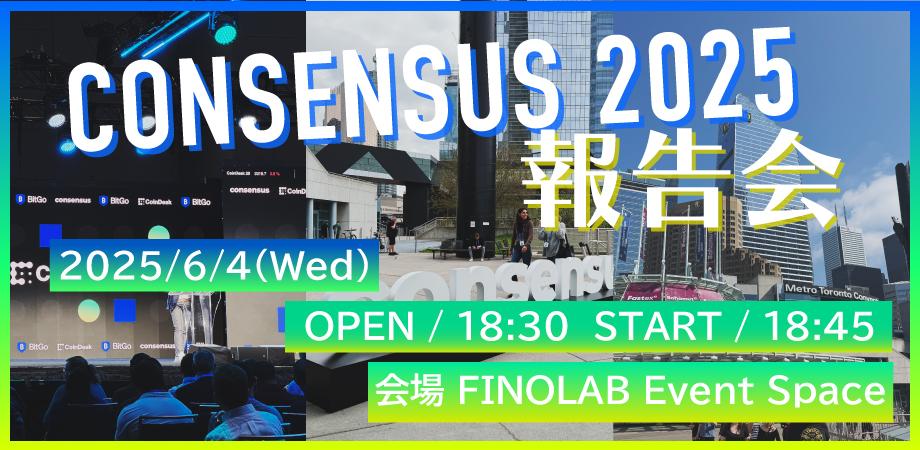
Overview: CONSENSUS 2025, one of the world’s largest global conferences for Web3 and crypto, was held in Toronto, Canada from May 14 to May 16, 2025. FINOLAB has participated in this conference for three consecutive years (2023–2025) to keep a consistent pulse on the evolution of blockchain, crypto, and Web3 technologies.
In this in-person event, members from FINOLAB and guest speakers will share insights and key trends observed at CONSENSUS 2025. The session will include individual presentations and a panel discussion focused on one of the conference’s central themes this year: Stablecoins.
For those who find it difficult to attend international conferences, this session offers a great opportunity to catch up on global developments and apply them to your own Web3 strategies.
Venue: FINOLAB 4F Event Space Map & Info Otemachi Building 4F, 1-6-1 Otemachi, Chiyoda-ku, Tokyo Note: Reception is located on the east end, near Tokyo Station
(Original article in Japanese was published for FinTech Journal on Apr. 23, 2025) https://www.sbbit.jp/article/fj/161696 Author: Makoto Shibata, Head of FINOLAB
With the rise of generative AI, financial crimes are becoming more sophisticated and harder to detect. In response, Japan is updating its regulations, including key changes to the Act on Prevention of Transfer of Criminal Proceeds, to better prevent fraud. This article highlights the growing threats and how we can prepare for them.
Overview of AI-Driven Financial Crime Trends
This article focuses on:
Three phishing-related crime methods
Three deepfake case studies
Six key countermeasures to protect against evolving fraud
Key Legal Changes and Implications for Fintech
In February 2025, Japan’s National Police Agency announced revisions to anti-money laundering laws, set to take effect in April 2027. Key changes include:
Individual Identity Verification: Online ID checks using selfies and ID photos will be discontinued. The system will move to using the My Number card’s electronic authentication.
Corporate Verification: Copies of ID documents will no longer be accepted. Originals are now required.
Alternatives for Those Without IC-enabled IDs: Documents like resident records must be submitted by mail.
These changes are a response to how AI can now create convincing fake videos (deepfakes) from a single image, making current identity verification methods unreliable.
3 Key Trends in Phishing Attacks
Phishing cases are increasing, with AI making scams more convincing and widespread. Here are three notable trends:
Voice Phishing (Vishing): AI-generated voice messages pretend to be from agencies like Japan’s Financial Services Agency, tricking people into sharing personal and banking details.
SMS Phishing (Smishing): Fake texts from delivery companies or telecom providers ask users to click links and input banking info.
Targeting Corporations: Scammers now also target businesses with fake calls and emails, leading victims to enter corporate banking credentials on fraudulent websites.
These tactics have caused major losses, including a high-profile case involving Yamagata Bank with possible damages of 1 billion yen.
3 Deepfake-Related Crime Cases
Criminals are using AI-generated images and videos to commit fraud. Here are three real cases:
Hong Kong (2024): A company lost 200 Million HK Dollar after scammers used a deepfake video call to impersonate its CFO and request a money transfer.
Georgia (2024): Deepfakes of celebrities were used in fake crypto ads, scamming over 6,000 victims out of 27 Million Pound.
UK (2024): A romance scam using deepfake videos led to a 77-year-old victim losing over 17 Thousand Pound.
6 Measures to Combat Evolving Financial Crimes
To protect against these increasingly sophisticated threats, both tech and human-focused measures are essential:
Use of deepfake detection tools
Adoption of multi-factor authentication (MFA)
Multi-step approval processes for transactions
Regular employee training
Promoting skepticism toward impersonation
Establishing clear incident response protocols
As technology evolves, criminals adapt quickly. Businesses must continuously review and strengthen their security measures to stay ahead.
The Investment and Development Agency of Latvia, accompanied by Latvian Minister of Economics, Viktors Valainis, and the Director of the Investment and Development Agency of Latvia, Ieva Jāgere, will hold an event in Tokyo at FINOLAB, a leading fintech center in Japan, on May 19 (Monday).
The event will feature the Latvian Minister and accompanying delegates from the Latvian fintech industry, including representatives from “FINTECH LATVIA,” the Latvian Blockchain Association, and various fintech-related organizations in Latvia.
Latvia: A Nordic Country Leading Social Transformation through Public-Private Collaboration
Latvia, a small country with a population of 1.9 million located in the center of the Nordic and Baltic countries, has been promoting advanced social transformation through public-private collaboration. This includes initiatives like establishing the world’s first startup law, advancing digital and data-driven social change led by the government, and effectively leveraging private sector initiatives as public services. Latvia has been at the forefront of developing infrastructure for 5G technology in Europe, driving digital transformation (DX), and leading international cooperation frameworks.
Latvia: A Key Destination for Global Business Services (GBS) Essential for Startup Scale-ups
The capital city of Riga has historically played an important role as a hub for global trade and culture, dating back to the Hanseatic League and the Imperial Era. In recent years, its significance has increased due to globalization, particularly in the area of Global Business Services (GBS), which provides a one-stop framework for services such as language support, legal, tax, HR, and customer services across the region. Latvia has become a key destination for startups, particularly in Europe and EU-adjacent countries, offering low-cost, high-quality services essential for businesses to comply with local regulations and secure talent.
Latvia: A Pioneer in the Introduction of the MiCA License for the Crypto Asset Market in the EU
Latvia was one of the first EU member states to introduce the MiCA (Markets in Crypto-Assets) license for crypto asset operations. The cost of obtaining and maintaining this license is among the lowest in the EU. Many major fintech companies have recognized the high value of establishing operations in Latvia to benefit from the MiCA license and are relocating or establishing offices in the country. Additionally, the Latvian Central Bank provides a regulatory sandbox that allows emerging companies and project teams to cooperate with the bank and develop new business models and services before entering the financial market or expanding their operations in the EU.
During this event, we will introduce the MiCA regulation, Latvian government incentives for fintech companies, and offer opportunities for networking between Latvian and Japanese companies. We look forward to your participation.
◆Venue :FINOLAB Event Space Otemachi Bldg 4F, Otemachi 1-6-1 , Chiyoda, Tokyo, 100-0004 Japan
◆Participation Fee:Free
◆Agenda
17:45-18:00 Reception 18:00-18:20 FINOLAB: Welcome and Introduction of the Business 18:20-18:25 Greeting from the Investment and Development Agency of Latvia 18:25-18:40 FINTECH LATVIA: Introduction to the Latvian Fintech Industry and Business Opportunities 18:40-18:55 LATVIA BLOCKCHAIN ASSOCIATION: Presentation of Business and Support Activities 18:55-19:15 Pitch Session from Latvian Fintech and IT Companies 19:15-20:30 Networking
*The main language will be English, but simultaneous translation will be available for the networking session in both Japanese and English.
*Light refreshments will be provided during the networking session.
※Regarding Photos and Videos This event may include photo and video recording, which may be published on media websites and platforms such as YouTube. If you are concerned about your face or voice being published online, please inform the staff on the day of the event. If no such request is made, it will be assumed that you consent to the publication online. We appreciate your cooperation.
※Handling of Personal Information Registration information will be managed according to the Privacy Policy(プライバシー ポリシー) of Peatix Japan Inc. Additionally, this information may be provided to FINOLAB, which operates FINOLAB. The Privacy Policy of FINOLAB Inc. can be found here.
※Event Information Notice Participants who register for this event may receive information regarding future events held by FINOLAB or events organized by FINOLAB, sent to the email address provided during registration. If no objection is made, it will be considered that you have consented to receiving these notifications. Thank you for your cooperation.

(Original Video in Japanese was published on the FINOLAB CHANNEL on Mar. 25, 2025)
Evolution of the Payment Services Act
Before diving into the details of the latest amendment, let’s take a quick look at the evolution of the Payment Services Act since its enactment in 2009:
2009: A new category called “funds transfer business” was introduced, allowing non-banking entities to engage in remittance services.
2016: With the rise of Bitcoin and other virtual currencies, a registration system for cryptocurrency exchanges was introduced.
2019: The term “virtual currency” was changed to “crypto assets,” and regulations on exchanges were tightened. To protect users’ assets, offline (cold storage) management became mandatory.
2022: Regulations were introduced to accommodate stablecoins as a payment method. The transfer limit for funds transfer businesses was raised, and a three-tier licensing system (Type 1, Type 2, and Type 3) was established.
These amendments reflect the industry’s response to technological advancements and emerging use cases.
Key Points of the 2025 Payment Services Act Amendment
The main aspects of the amendment, which was approved by the Cabinet in March 2025, include the following:
1. Introduction of Domestic Asset Retention Orders for Crypto Asset Exchanges
Previously, there was concern that crypto asset exchanges handling spot transactions could transfer their assets overseas. The amendment allows the government to issue asset retention orders to prevent such outflows.
2. Flexible Management Requirements for Trust-Based Stablecoin Reserves
Previously, stablecoin issuers were required to hold reserves in full as demand deposits. The amendment allows issuers to hold up to 50% of their reserves in low-risk assets such as government bonds or redeemable term deposits. This change is expected to enhance the international competitiveness of stablecoins issued in Japan.
Although no registration was permitted for stablecnin operator after the new regulation in 2022, SBI VC Trade, part of the SBI Group, has become the first company in Japan to register for handling stablecoins. It plans to offer USDC, issued by Circle.
3. Establishment of a Brokerage Category for Crypto Asset Transactions
Until now, entities engaging only in mediating crypto asset transactions were required to register as full-fledged exchanges, creating high entry barriers. The amendment introduces a new brokerage category, allowing intermediaries to operate under a separate, more appropriate regulatory framework. This change aligns with financial regulations in other sectors and is expected to promote new service providers.
4. Regulation of Cross-Border Payment Collection Services
Recent regulatory changes now impose rules on cross-border payment collection services, which were previously unregulated. While these services do not require a funds transfer business license under the current framework, some have been misused for illegal activities such as online gambling and investment fraud. To address these risks, new regulations have been introduced.
The new rules aim to crack down on unregistered operators involved in illegal fund transfers. For services with higher risks, additional regulations will enhance consumer protection and strengthen anti-money laundering (AML) measures.
Cross-border payment collection services that do not directly facilitate product or service transactions will now be subject to funds transfer regulations. However, low-risk services—such as platforms directly involved in transactions or escrow services—may be exempt if they are already regulated under other laws.
Some industry groups, including the Japan Association of New Economy, have raised concerns that excessive regulation could harm digital payment services. They urge policymakers to ensure that the new rules are focused on actual risks and do not disrupt existing ecosystems like e-payments and point-based settlements. As the final details of these regulations take shape, it will be important to monitor their impact on businesses and innovation.
5. Faster Refund Process for Users in the Event of a Funds Transfer Business Failure
Previously, even when funds transfer businesses secured user assets through bank guarantees or trusts, refunds were processed through a government-led procedure, taking at least 170 days. The recent amendment introduces direct refund options, allowing banks and trust companies to return funds to users without going through the traditional process. This change enhances consumer protection and ensures faster access to funds in the event of a business failure, improving the overall efficiency of financial services.
Future Outlook
The 2025 amendment is expected to:
Reduce the burden on stablecoin issuers, promoting stablecoin adoption in Japan.
Lower barriers to entry for crypto asset intermediaries, expanding financial business opportunities.
Introduce new regulations for cross-border collection services, with ongoing discussions on implementation details.
As the regulatory framework continues to evolve, stakeholders will be closely watching the government’s next steps, including specific regulations under ministerial ordinances.
(Original Video in Japanese was published on the FINOLAB CHANNEL on Feb. 10, 2025)
This article summarizes the FINOLAB CHANNEL’s FinTech Topics #113 video, which discusses the diversification of online and mobile banks in Japan, focusing on the utilization of Banking as a Service (BaaS) and the entry of new business sectors into the financial industry.
The First Generation of Internet Banks
The video begins by noting that over two decades have passed since the emergence of the first generation of internet-only banks in Japan. These initial players, while some have rebranded, laid the groundwork for today’s digital banking landscape. These include Japan Net Bank (now PayPay Bank), Sony Bank, eBank Bank (now Rakuten Bank), Sumitomo SBI Net Bank (which actively promotes its BaaS platform under the name NEOBANK), and Jibun Bank (now au Jibun Bank).
The Second Generation and Mobile-Only Approaches
Following the initial wave, a second generation of online banks has emerged, often in collaboration with other financial institutions or as part of larger internet groups. These include Daiwa NEXT Bank (linked with Daiwa Securities), GMO Aozora Net Bank (part of GMO Group), Minna Bank (part of Fukuoka Financial Group), and UI Bank (part of Tokyo Kiraboshi Financial Group). Notably, some of these newer banks have adopted a mobile-only strategy, solely focusing on smartphone-based transactions.
Convenience Store Banks
Alongside these developments, major convenience store chains like Seven Bank, Lawson Bank, and AEON Bank have also established their own banks. While having ATM networks, these convenience store banks can be considered similar to online banks due to their lack of traditional branch networks.
Banking as a Service (BaaS) and NEOBANK
The discussion then shifts to Banking as a Service (BaaS), with Sumitomo SBI Net Bank’s NEOBANK highlighted as a key player. NEOBANK partners with various industries to create new banking services. Examples include JAL NEOBANK (with Japan Airlines), Takashimaya NEOBANK (with the department store, Takashimaya), Yamada NEOBANK (with electronics retailer chain, Yamada Denki), Dai-ichi Life NEOBANK (with Dai-ichi Life Insurance), SBI Securities NEOBANK, and SBI Remit NEOBANK.
Recent Developments in BaaS Partnerships
The video emphasizes significant developments in BaaS in the past 2 years, with new entrants from diverse sectors. These include:
Transportation: JRE Bank (a partnership between JR East and Rakuten Bank, launched in May 2024, offering railway-related benefits), and KEIO NEOBANK (a collaboration between Keio Corporation and Sumitomo SBI Net Bank, from Sep. 2023, providing services linked to Keio Passport card membership and benefits along the Keio railway lines).
Real Estate: Hebel Haus NEOBANK (a service from Asahi Kasei Homes and Sumitomo SBI Net Bank, launched in June 2024, tailored for residents of Hebel Haus, offering enhanced housing loan guarantees), and Yutaka Bank (a service from KI-Star Real Estate and Sumitomo SBI Net Bank, focusing on housing loans and KI Points), .
Energy: Katene Bank from Dec. 2024 (a partnership between Chubu Electric Power and Sumitomo SBI Net Bank, offering benefits like housing loan discounts and points for electricity/gas usage), and a planned collaboration between Kansai Electric Power, UI Bank, and Kiraboshi Group to create a new bank focused on zero-carbon initiatives, where deposits will fund environmentally friendly projects and offer eco-friendly housing loans.
Digital Banks for Small and Medium-sized Enterprises (SMEs)
The video also introduces the concept of digital banks specifically targeting SMEs, such as the planned 01 Bank. This initiative by Ikeda Senshu Bank, a regional bank from Osaka, utilizing GMO Aozora Net Bank’s BaaS platform, aims to launch in fiscal year 2024 with significantly lower initial investment compared to first-generation online banks. 01 Bank intends to integrate with various cloud services used by SMEs (e.g., accounting, expense management) to streamline financial operations and create a compelling banking service.
Key Trends and Future Outlook
The video concludes by highlighting several key trends:
Evolution of branchless banking: New online/mobile banking services prioritize smartphone applications.
Lower entry barriers: BaaS significantly reduces the initial investment required to launch a digital bank.
Diversification of BaaS providers: The BaaS landscape is becoming more competitive, with multiple online/digital banks offering these services.
Synergy with core businesses: New entrants are increasingly focused on creating synergies between their existing businesses and their banking services to offer unique value propositions to customers.
Impact of rising interest rates: The return to a world with interest rates allows banks to differentiate their services more effectively.
Overall, the Japanese online and mobile banking sector is experiencing significant diversification driven by the adoption of BaaS, enabling companies from various industries to enter the financial services market and offer tailored banking solutions to their customer bases.
(Original Video in Japanese was published on the FINOLAB CHANNEL on Jan. 15, 2025)
Japan’s Growing Need for Digital End-of-Life Planning
With Japan’s rapidly aging population, end-of-life planning (終活, shūkatsu) is becoming increasingly important. By 2025, one in five people in Japan will be over 75, bringing significant challenges in pensions, healthcare, and caregiving. Traditionally, end-of-life planning focused on funeral arrangements and inheritance, but in recent years, it has expanded to include personal reflection, life organization, and most notably—digital assets.
The Rise of Digital End-of-Life Planning
As financial transactions and social interactions move online, digital legacy management has become a growing concern. Many elderly individuals now use the internet, with about half of those in their 70s actively online. However, digital assets—ranging from online banking accounts and subscription services to social media profiles and cryptocurrency holdings—can be difficult for family members to manage after one’s passing.
Without proper planning, families may struggle to access or even become unaware of valuable digital assets, leading to financial loss or the continuation of unnecessary subscription fees. This has created a demand for digital solutions that help organize and transfer digital assets effectively.
Common Challenges in Managing Digital Assets
Key issues that arise after an individual’s passing include:
Inaccessible Online Accounts: Without passwords, families cannot access social media, email, or banking services.
Unclaimed Digital Assets: Cryptocurrencies, e-money, and other digital financial holdings may go unnoticed.
Ongoing Subscriptions: Services linked to credit cards (e.g., streaming, cloud storage) may continue to charge fees indefinitely.
Legal Complexities: Navigating inheritance laws for digital assets is often more complicated than for physical property.
How to Prepare for Digital End-of-Life Planning
The National Consumer Affairs Center of Japan recommends the following steps to ensure a smooth digital inheritance process:
Document Important Passwords Securely: Write down smartphone, email, and key account passwords and store them in a secure location. However, be cautious about security risks.
Organize Account Information: List all active online services, including social media, subscriptions, and financial accounts.
Create an “Ending Note”: A document that outlines what should happen to digital assets and personal belongings after passing.
Appoint a Trusted Contact: Designate a family member or close friend who can access important accounts when necessary.
Emerging Digital Solutions for End-of-Life Planning
To address these challenges, various digital services have emerged in Japan, offering solutions for managing and transferring digital assets:
tayorie: Sends pre-written messages and important information to designated recipients when specific conditions are met, ensuring that vital details reach the right people.
Yuigon Net(遺言ネット): A service supervised by legal professionals to help users create digital wills and organize end-of-life documents.
Digital Legacy Services by J-Factory: Assists with retrieving, organizing, and securely disposing of digital data.
Digital Keeper: Enables individuals to securely store and transfer login credentials and digital assets to their families.
SonaSapo(そなサポ ): A real estate-related service supporting seamless inheritance processes via a digital platform.
SMBC Digital Safety Box: A digital vault that allows users to store important documents and instructions for their heirs.
Future Outlook and Challenges
As digital transformation accelerates, the need for structured end-of-life digital asset management will continue to grow. Additionally, as Japan experiences a rise in single-person households, new services will be required to address cases where there are no immediate family members to manage digital legacies.
The digitalization of end-of-life planning is still evolving, but the demand for secure, user-friendly solutions will only increase. It is crucial for individuals to start organizing their digital assets early, ensuring a smooth transition for their loved ones.
(Original Video in Japanese was published on the FINOLAB CHANNEL on Dec. 13, 2024)
In modern society, the “credit score,” which quantifies an individual’s creditworthiness, plays a crucial role in financial transactions and daily life. This article provides a detailed overview of the basics of credit scores, their use cases in Japan and abroad, and their future prospects.
What is a Credit Score?
A credit score is a numerical indicator of an individual’s creditworthiness and ability to repay debts. It is used in the following scenarios:
Loan approvals (e.g., mortgages, car loans)
Credit card issuance
Rental agreements (credit checks by guarantee companies)
Mobile phone contracts (installment payment reviews)
Higher scores indicate greater creditworthiness, while lower scores are seen as a sign of higher risk.
Factors in Calculating a Credit Score
Credit scores are typically calculated based on these elements:
Payment history
Ratio of credit usage to credit limits
Length of credit history
New credit accounts
Types of credit
Credit bureaus use these factors to calculate scores using proprietary criteria.
The Credit Score System in the United States
The U.S. is considered a leader in credit scoring, with centralized data management by credit bureaus such as Experian, Equifax, and TransUnion. A prominent metric is the FICO score, which typically ranges from 300 to 850 points.
Key components of a FICO score include:
Payment History (35%)
Whether credit card and loan repayments are made on time.
Presence of past delinquencies or defaults.
Amount Owed (30%)
The ratio of the amount used to the credit card limit (credit utilization rate).
A utilization rate of 30% or less is considered ideal.
Length of Credit History (15%)
The length of time credit accounts have been held. A longer history indicates reliability.
New Credit (10%)
Frequency of applications for new credit cards or loans.
Submitting multiple applications within a short period can lower the score.
Types of Credit Used (10%)
A diverse mix of credit, such as credit cards, home loans, and education loans, is rated more favorably.
FICO scores impact not only loan and credit card approvals but also rental agreements, insurance premiums, and even job applications.
Tips for Improving Your Credit Score
To boost your credit score, consider the following:
Make payments on time.
Keep credit utilization below 30%.
Maintain a long credit history.
Avoid applying for too much new credit in a short time.
Regularly check your credit score.
Challenges with Credit Scores
Credit scoring methods can be complex and difficult for many to understand. Furthermore, immigrants and young people with no credit history often face disadvantages, leading to difficulties in accessing financial services. Privacy concerns regarding the handling of data required for credit scoring are another issue.
Credit Scoring in China: The Sesame Credit Example
China’s credit scoring system has garnered global attention. A notable example is Sesame Credit (芝麻信用), provided by Ant Financial, part of the Alibaba Group. It uses credit scores for various societal applications. High scores offer benefits such as waived deposits for car rentals or preferential loan rates. In some cases, families even consider scores when evaluating potential marriage partners.
Sesame Credit evaluates users based on factors such as “personal traits,” “fulfillment ability,” “credit history,” “social connections,” and “behavioral preferences.” Compared to the U.S.’s FICO score, Sesame Credit incorporates broader and more detailed personal data.
Social Impact and Challenges
The widespread use of credit scores in China has had the following effects:
Reduced theft in unmanned stores.
Increased return rates for free rental umbrellas.
Fewer disputes over payment after services.
However, challenges include excessive data collection, falsification of information to improve scores, and income or occupational disparities leading to score gaps.
Credit Scoring in Japan
Japan has three major credit information agencies: CIC, JICC, and KSC. Each agency manages information for different purposes. While some of the data they hold overlaps, it is not entirely identical.
CIC handles information primarily from credit card companies and consumer finance companies.
JICC focuses on managing consumer finance information.
KSC centers on banking-related information and includes data such as utility payment records. These agencies cover different areas of credit information.
Consumers and businesses can request disclosure to check the information registered about them. However, credit scores themselves have not been disclosed so far, which has contributed to a lack of understanding of individual credit standings.
Introduction of Credit Guidance
Starting in late November 2024, CIC will launch a new service called “Credit Guidance,” which provides consumers and businesses with credit scores calculated based on their credit information. This service will display a three-digit score along with the main factors that influenced the score.
The goal of this initiative is to help consumers understand their credit status, improve financial literacy, and prevent over-indebtedness. For member companies, the service is expected to facilitate appropriate credit agreements and standardize credit evaluation, contributing to the promotion of digital transformation.
Scoring Criteria and Usage
The Credit Guidance score is calculated based on objective data such as payment history, outstanding balances, the number of contracts, the duration of contracts, and the number of applications submitted. This allows users to view their credit information in a transparent manner.
Disclosure requests require a fee of 500 yen via the internet or 1,500 yen via mail. The score and four key influencing factors are disclosed. Additionally, score distribution data shows that the average score typically falls within the range of 630 to 709 points.
Other Credit Score Initiatives in Japan
In recent years, several new credit score initiatives have emerged:
J.Score: Launched in 2017 by Mizuho Bank and SoftBank, this service aimed to provide a new credit scoring system for consumers. However, despite growing user registration, borrowing performance stagnated, leading to its termination in 2022. Reasons for this included:
Users with high scores were unable to secure loans.
Loans for users with low scores were challenging.
Differences from conventional credit scores were unclear, which discouraged active use.
Insufficient explanation to users.
Docomo Score Link: Since August 2019, NTT Docomo has offered this service using its lending platform. It calculates scores based on various user data, leveraging big data. The scores are made available for financial institutions to use in credit evaluations.
M.Score by MILIZE: In February 2024, fintech company MILIZE introduced “M.Score,” a SaaS-based credit scoring model developed in collaboration with Tensor Consulting. By answering questions via a smartphone or computer app, consumers can calculate their own credit score. The service aims to make credit scores more accessible and relevant to consumers, with expectations for broad usage scenarios.
These efforts represent steps toward exploring new approaches to credit scoring in the financial industry, and further improvements are anticipated in the future.
Challenges and Prospects for Widespread Adoption of Credit Scores
Efforts related to credit scores are expected to become increasingly important. With the enhanced disclosure functions of agencies like CIC, credit score awareness is likely to grow. However, several steps are necessary for broader adoption:
Expanding the Utility of Credit Scores: Credit scores should be applicable in various situations, promoting the perception that “having a credit score is useful in many contexts.”
Improving Financial Literacy: It is crucial to ensure that people understand what credit scores represent and how they affect borrowing.
Advancing Digitalization: Utilizing AI and big data to simplify credit score calculations is essential. Allowing businesses to check and track scores anytime through smartphones can increase convenience.
Cultural Perception Shift in Japan: Traditionally, debt has been viewed negatively. However, it is necessary to reposition credit scores as a “positive indicator of personal trustworthiness.” This shift in perception will accelerate the adoption of credit scores.
As developments surrounding credit scores continue to accelerate, addressing these challenges, enhancing their utility, improving financial literacy, and advancing digitalization will be key to their successful integration.