[Summary] Diversification of Online and Mobile Banks: Leveraging BaaS and New Industry Entrants | FinTech Topics #113

(Original Video in Japanese was published on the FINOLAB CHANNEL on Feb. 10, 2025)

This article summarizes the FINOLAB CHANNEL’s FinTech Topics #113 video, which discusses the diversification of online and mobile banks in Japan, focusing on the utilization of Banking as a Service (BaaS) and the entry of new business sectors into the financial industry.

The First Generation of Internet Banks

The video begins by noting that over two decades have passed since the emergence of the first generation of internet-only banks in Japan. These initial players, while some have rebranded, laid the groundwork for today’s digital banking landscape. These include Japan Net Bank (now PayPay Bank), Sony Bank, eBank Bank (now Rakuten Bank), Sumitomo SBI Net Bank (which actively promotes its BaaS platform under the name NEOBANK), and Jibun Bank (now au Jibun Bank).

The Second Generation and Mobile-Only Approaches

Following the initial wave, a second generation of online banks has emerged, often in collaboration with other financial institutions or as part of larger internet groups. These include Daiwa NEXT Bank (linked with Daiwa Securities), GMO Aozora Net Bank (part of GMO Group), Minna Bank (part of Fukuoka Financial Group), and UI Bank (part of Tokyo Kiraboshi Financial Group). Notably, some of these newer banks have adopted a mobile-only strategy, solely focusing on smartphone-based transactions.

Convenience Store Banks

Alongside these developments, major convenience store chains like Seven Bank, Lawson Bank, and AEON Bank have also established their own banks. While having ATM networks, these convenience store banks can be considered similar to online banks due to their lack of traditional branch networks.

Banking as a Service (BaaS) and NEOBANK

The discussion then shifts to Banking as a Service (BaaS), with Sumitomo SBI Net Bank’s NEOBANK highlighted as a key player. NEOBANK partners with various industries to create new banking services. Examples include JAL NEOBANK (with Japan Airlines), Takashimaya NEOBANK (with the department store, Takashimaya), Yamada NEOBANK (with electronics retailer chain, Yamada Denki), Dai-ichi Life NEOBANK (with Dai-ichi Life Insurance), SBI Securities NEOBANK, and SBI Remit NEOBANK.

Recent Developments in BaaS Partnerships

The video emphasizes significant developments in BaaS in the past 2 years, with new entrants from diverse sectors. These include:

  • Transportation: JRE Bank (a partnership between JR East and Rakuten Bank, launched in May 2024, offering railway-related benefits), and KEIO NEOBANK (a collaboration between Keio Corporation and Sumitomo SBI Net Bank, from Sep. 2023, providing services linked to Keio Passport card membership and benefits along the Keio railway lines).
  • Real Estate: Hebel Haus NEOBANK (a service from Asahi Kasei Homes and Sumitomo SBI Net Bank, launched in June 2024, tailored for residents of Hebel Haus, offering enhanced housing loan guarantees), and Yutaka Bank (a service from KI-Star Real Estate and Sumitomo SBI Net Bank, focusing on housing loans and KI Points), .
  • Energy: Katene Bank from Dec. 2024 (a partnership between Chubu Electric Power and Sumitomo SBI Net Bank, offering benefits like housing loan discounts and points for electricity/gas usage), and a planned collaboration between Kansai Electric Power, UI Bank, and Kiraboshi Group to create a new bank focused on zero-carbon initiatives, where deposits will fund environmentally friendly projects and offer eco-friendly housing loans.

Digital Banks for Small and Medium-sized Enterprises (SMEs)

The video also introduces the concept of digital banks specifically targeting SMEs, such as the planned 01 Bank. This initiative by Ikeda Senshu Bank, a regional bank from Osaka, utilizing GMO Aozora Net Bank’s BaaS platform, aims to launch in fiscal year 2024 with significantly lower initial investment compared to first-generation online banks. 01 Bank intends to integrate with various cloud services used by SMEs (e.g., accounting, expense management) to streamline financial operations and create a compelling banking service.

Key Trends and Future Outlook

The video concludes by highlighting several key trends:

  • Evolution of branchless banking: New online/mobile banking services prioritize smartphone applications.
  • Lower entry barriers: BaaS significantly reduces the initial investment required to launch a digital bank.
  • Diversification of BaaS providers: The BaaS landscape is becoming more competitive, with multiple online/digital banks offering these services.
  • Synergy with core businesses: New entrants are increasingly focused on creating synergies between their existing businesses and their banking services to offer unique value propositions to customers.
  • Impact of rising interest rates: The return to a world with interest rates allows banks to differentiate their services more effectively.

Overall, the Japanese online and mobile banking sector is experiencing significant diversification driven by the adoption of BaaS, enabling companies from various industries to enter the financial services market and offer tailored banking solutions to their customer bases.

[Summary] JR West’s “All-in-One” Payment Service “Wesmo!”—Its Three Strategic Goals, Challenges, and Prospects

(Original article in Japanese was published for FinTech Journal on Jan. 6, 2025)
https://www.sbbit.jp/article/fj/156810

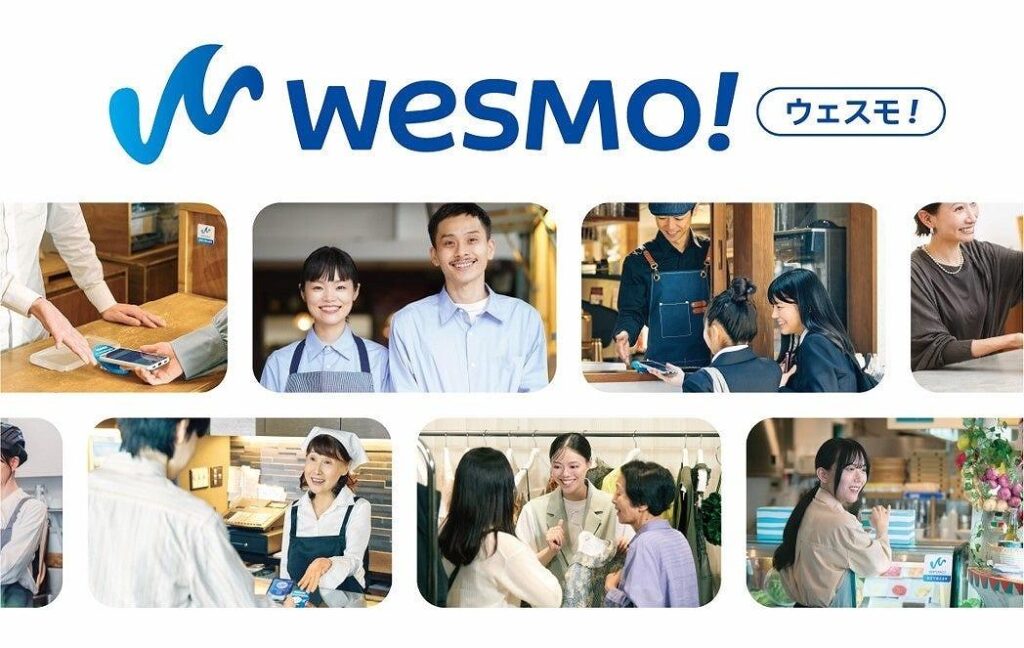
JR West will launch “Wesmo!” in Q1 of fiscal year 2025, an ambitious cashless payment and wallet service integrating various financial functions. This move reflects a growing trend of railway companies expanding into financial services.

What is Wesmo! and JR West’s Financial Expansion? (Source: JR West Press Release)

What is Wesmo!?

Announced on January 21, 2025, Wesmo! aims to enhance daily and business transactions. JR West, the first railway operator registered as a Type II Funds Transfer Service Provider, offers:

For Individual Users

  • Charge Function: Load funds via bank accounts, Seven Bank ATMs, or J-WEST Cards.
  • Money Transfer: Peer-to-peer transactions among users.
  • Point Integration: Earn and use WESTER Points across ICOCA and J-WEST Card services.

For Merchants

  • Low-Cost Payment Solution: “BLUE Tag Touch” with zero setup cost and a 1.9% transaction fee.
  • Fast Revenue Collection: Next-day settlements.
  • B2B Transfers: Free supplier payments to improve efficiency.

Payment Methods

  • BLUE Tag Touch: Tap to pay via smartphone.
  • QR Code Payment: Alternative for stores without BLUE Tags.

Launch Timeline & Future Features

Merchant recruitment began in January 2025, with planned expansions including:

  • ICOCA Charging: Direct top-ups via the Wesmo! app.
  • Digital Salary Deposits: Pending government approval, offering payroll integration.

Strategic Goals

  1. Higher-Value Transactions: Competes with QR code and credit card payments, supporting transactions up to ¥1 million.
  2. Expanded Transfer Capabilities: Unlike Suica, Wesmo! enables peer-to-peer transfers but imposes limits based on identity verification level.
  3. Aggressive Merchant Acquisition: Competitive transaction fees (1.9% vs. PayPay’s 1.98%) and next-day payouts enhance merchant appeal.

JR West’s Other Financial Activities, Digital Bonds

In June 2024, JR West issued “WESTER Bonds” using blockchain, engaging investors with loyalty rewards and exclusive perks, reinforcing ties with customers beyond traditional railway services.

Railway-Finance Synergy

Railway and airlines are increasingly integrating financial services:

  • JR East: Launched “JRE Bank” in 2024, offering up to 40% Shinkansen fare discounts.
  • Keio Corporation: Introduced “KEIO NEOBANK” in 2023.
  • Airlines: JAL and ANA have integrated banking and payment services.

However, nationwide adoption may take some time; Suica and ICOCA interoperability took a decade, making Wesmo!’s broader expansion a long-term challenge.

Challenges & Prospects

Wesmo! offers comprehensive features but faces a saturated cashless payment market. With 9 million Wester members, JR West has a solid foundation, yet widespread adoption will take some time. Additionally, differing strategies within the JR Group may hinder nationwide implementation.

While Wesmo! is well-positioned for success, overcoming competition and scaling effectively will be crucial for long-term sustainability.

[Summary] The Digitalization of End-of-Life Planning – Addressing the Needs of a Super-Aging Society | FinTech Topics #112

(Original Video in Japanese was published on the FINOLAB CHANNEL on Jan. 15, 2025)

Japan’s Growing Need for Digital End-of-Life Planning

With Japan’s rapidly aging population, end-of-life planning (終活, shūkatsu) is becoming increasingly important. By 2025, one in five people in Japan will be over 75, bringing significant challenges in pensions, healthcare, and caregiving. Traditionally, end-of-life planning focused on funeral arrangements and inheritance, but in recent years, it has expanded to include personal reflection, life organization, and most notably—digital assets.

The Rise of Digital End-of-Life Planning

As financial transactions and social interactions move online, digital legacy management has become a growing concern. Many elderly individuals now use the internet, with about half of those in their 70s actively online. However, digital assets—ranging from online banking accounts and subscription services to social media profiles and cryptocurrency holdings—can be difficult for family members to manage after one’s passing.

Without proper planning, families may struggle to access or even become unaware of valuable digital assets, leading to financial loss or the continuation of unnecessary subscription fees. This has created a demand for digital solutions that help organize and transfer digital assets effectively.

Common Challenges in Managing Digital Assets

Key issues that arise after an individual’s passing include:

  • Inaccessible Online Accounts: Without passwords, families cannot access social media, email, or banking services.
  • Unclaimed Digital Assets: Cryptocurrencies, e-money, and other digital financial holdings may go unnoticed.
  • Ongoing Subscriptions: Services linked to credit cards (e.g., streaming, cloud storage) may continue to charge fees indefinitely.
  • Legal Complexities: Navigating inheritance laws for digital assets is often more complicated than for physical property.

How to Prepare for Digital End-of-Life Planning

The National Consumer Affairs Center of Japan recommends the following steps to ensure a smooth digital inheritance process:

  • Document Important Passwords Securely: Write down smartphone, email, and key account passwords and store them in a secure location. However, be cautious about security risks.
  • Organize Account Information: List all active online services, including social media, subscriptions, and financial accounts.
  • Create an “Ending Note”: A document that outlines what should happen to digital assets and personal belongings after passing.
  • Appoint a Trusted Contact: Designate a family member or close friend who can access important accounts when necessary.

Emerging Digital Solutions for End-of-Life Planning

To address these challenges, various digital services have emerged in Japan, offering solutions for managing and transferring digital assets:

  • tayorie: Sends pre-written messages and important information to designated recipients when specific conditions are met, ensuring that vital details reach the right people.
  • Yuigon Net(遺言ネット): A service supervised by legal professionals to help users create digital wills and organize end-of-life documents.
  • Digital Legacy Services by J-Factory: Assists with retrieving, organizing, and securely disposing of digital data.
  • Digital Keeper: Enables individuals to securely store and transfer login credentials and digital assets to their families.
  • SonaSapo(そなサポ : A real estate-related service supporting seamless inheritance processes via a digital platform.
  • SMBC Digital Safety Box: A digital vault that allows users to store important documents and instructions for their heirs.

Future Outlook and Challenges

As digital transformation accelerates, the need for structured end-of-life digital asset management will continue to grow. Additionally, as Japan experiences a rise in single-person households, new services will be required to address cases where there are no immediate family members to manage digital legacies.

The digitalization of end-of-life planning is still evolving, but the demand for secure, user-friendly solutions will only increase. It is crucial for individuals to start organizing their digital assets early, ensuring a smooth transition for their loved ones.

[Summary] The 10 Major Fintech Trends for 2025

(Original article in Japanese was published for FinTech Journal on Jan. 6, 2025)
https://www.sbbit.jp/article/fj/154120

What are the 10 major trends for 2025?(Photo/Shutterstock.com)

As 2025 approaches, marking a quarter-century since the beginning of the 21st century, it is set to be a milestone year for Japan in many ways. This article will first explain some of the symbolic aspects that have been pointed out in previous discussions. Following that, we will explore 10 key trends, including the expansion of financial DX, the practical application and advancement of generative AI, the progress of cashless payments, new developments in BaaS, the implementation of digital currencies, the diversification of digital securities, the personalization of insurance, the expansion of services for SMEs, and the further increase in online financial crimes.

The 2025 Problem: Super-Aging Society

By 2025, one in five Japanese citizens will be 75 or older, increasing demand for pensions, healthcare, and financial services for the elderly while exacerbating labor shortages.

The 2025 Digital Cliff: Delayed Digital Transformation (DX)

Japanese companies must accelerate DX efforts to remain competitive. Legacy systems, IT talent shortages, and security risks pose challenges, with estimated annual economic losses of ¥12 trillion if DX stagnates.

My Number 2025 Issue: Electronic Certificate Renewal

Japan’s National ID, My Number Card system will require the renewal of 27 million electronic certificates in 2025 before the renewal of physical cards, raising concerns about disruptions in access to healthcare and other services. 

With 2025 marking such a critical transition year, the following paragraphs will explore 10 key fintech trends that are expected to play a significant role in shaping the industry.

1. Expansion of Financial DX

The financial industry is shifting from process digitization to full operational restructuring. This includes AI adoption, talent reskilling, and fundamental changes in banking and insurance sales.

2. Generative AI in Finance

AI is evolving from automating tasks to acting as an autonomous financial agent. AI-driven “machine workers” may replace human customer service, and “machine customers” could conduct financial transactions independently.

3. A “World with Interest Rates”

Japan’s exit from zero-interest rates is reshaping financial strategies. Banks are strengthening deposit acquisition, and fintech firms are exploring new revenue models. Risk management solutions are becoming critical to prepare for the further interest rise.

4. Progress of Cashless Payments

Japan’s cashless payment ratio reached 39.3% in 2023, nearing its 40% target for 2025. Expansion efforts now focus on businesses and inbound tourism, with QR code payment standardization and international partnerships (e.g., PayPay & Ant Group).

5. New Developments in BaaS (Banking as a Service)

BaaS adoption is evolving beyond embedded finance. Examples include digital banks partnering with energy and crypto firms to create new financial products. More innovation is expected in 2025.

6. Implementation of Digital Currencies

Japan is exploring CBDCs alongside global central banks, though no immediate launch is planned. Stablecoins and deposit tokens are gaining traction, with increasing real-world use cases.

7. Diversification of Digital Securities

The market for blockchain-based digital securities is growing, expanding beyond real estate into green bonds and entertainment financing. Asset-backed digital tokens are expected to gain popularity.

8. Personalized Insurance (Insurtech)

AI-driven data analysis enables more customized insurance offerings, such as wellness programs and employee benefits linked to health metrics from wearable devices.

9. Expansion of SME Financial Services

New fintech solutions cater to small businesses, including alternative lending models and digital accounting services to improve SME financial inclusion.

10. Rise in Online Financial Crimes

With digital finance expanding, cyber threats such as fraud and hacking are increasing. Stronger security measures and AI-based fraud detection are becoming essential to cope with tech-savvy fraudsters.

Conclusion

Japan faces significant challenges, including a declining workforce, making it imperative to improve efficiency across society. In the financial sector, expectations for emerging technology—especially generative AI—are high. 2025 is likely to be a critical year for fintech, as its true capabilities will be tested in addressing these pressing issues.